The Big Picture
Starship Catches Its Ship; Compute Is the Real Battlefield
SpaceX's launch tower at Starbase, Texas, caught the Starship upper stage — Ship 42 — with its chopstick arms on Saturday, which the company says is the first time an orbital rocket's upper stage has returned to its launch site and been caught. The ship spent roughly 22.5 hours in orbit on Flight 15, about 14 orbits, and deployed all 26 of its Starlink V3 satellites; three of those satellites carried cameras, and SpaceX judged the heat-shield imagery good enough to skip a backup splashdown option. The flight was not clean: Super Heavy aborted its own catch during the coast phase, with the available account pointing to a guidance issue. A reusable upper stage is the difference between a rocket that throws hardware away and one that flies it again, and catching one — not splashing it down — is the harder half of that problem.
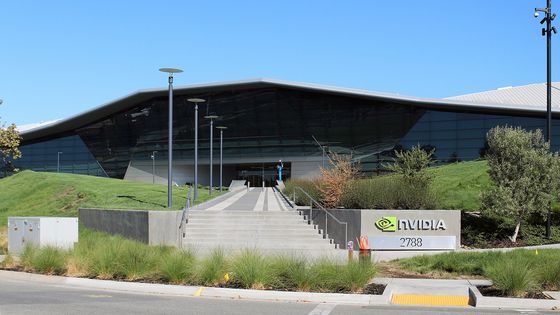
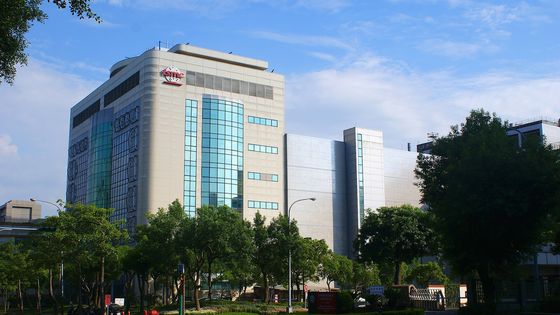
The day's other stories cluster around a single contested input: compute, and who is allowed to buy it. Meituan published the weights of LongCat-2.5, a 1.6-trillion-parameter agent model it says was trained entirely on Chinese hardware with no Nvidia GPUs; Meituan reports 88.4 on Terminal Bench, a command-line agent benchmark, just behind Claude Opus 5, and The Decoder reports a sample deployment running on 194 Huawei Ascend chips. Meanwhile The Wall Street Journal reported that Nvidia chips have been reaching Chinese firms through large Southeast Asian data centers that exploited a gap in U.S. sanctions, describing a multibillion-dollar business built during Jensen Huang's tenure as CEO. A New York Times investigation, summarized by Techmeme, reports that Commerce Secretary Howard Lutnick pushed to narrow chip export restrictions affecting data centers in Southeast Asia, some of them clients of his former firm, Cantor Fitzgerald, with one facility in Malaysia possibly serving Tencent. The rulebook is being written by people with commercial stakes in where it lands. The cost side is just as pointed: Dario Amodei, days before a planned record IPO, called buying compute Anthropic's "deepest business dilemma," according to The Decoder, which reports commitments near $901 billion and says the IPO is largely a financial buffer because future revenue may not justify the bill. TSMC, per Nikkei Asia, plans a $500 million fund to take stakes in chip startups and suppliers — one executive described backing "the future's Nvidia."
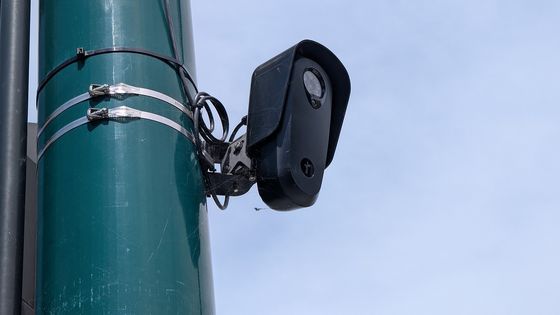
The second thread is that AI systems are now both the weapon and the weak layer. The FBI and DOJ said they disrupted a North Korean campaign they named FaceStealer, seizing cloud infrastructure containing 900 videos of targeted victims; according to the FBI, it used AI deepfakes and fake Zoom or Teams meetings to plant malware, then harvested browser sessions and CI/CD build credentials, and the FBI attributes about $400 million in stolen cryptocurrency to it — Tom's Hardware ties it to the Binance heist and describes that hack as taking over $5 billion. On the defensive side, security research published at crissyfield.de found apps built with Lovable, the AI app builder, exposed passport details and more than 200,000 private messages; Lovable's head of security attributed the exposures on Hacker News to insufficient Row-Level Security, the Supabase/Postgres rules governing what a signed-in browser can read. Lovable says it scans every app before publishing and offers a free, deeper static-analysis scan with a "Fix" option. EFF, separately, asked an appeals court to hold that searching a networked license-plate-reader system is a Fourth Amendment search requiring a warrant — advocacy, not a ruling.
The sourcing on the most consequential stories is thin. The Journal and Times items arrive here as a headline and a one-line summary: no named countries, operators, chip models or volumes, and no response from Nvidia or Lutnick in the material. Meituan's benchmark claim comes without the Opus 5 score it is compared to, and without training-run size, duration or license terms — so "trained without Nvidia" is a company statement, not yet an independently reproduced result. Nidus's "seven figures" of bookings with defense industrial customers in four months is unconfirmed as paid orders; no customers or deployment figures were disclosed. Dongfeng Nissan's NX7 claim of up to 320 km (~198 miles) of electric range from a 40 kWh LFP pack at roughly $20,000 does not specify trim or test cycle, though a pack that size is what makes the number plausible. Tesla's 8.5% Model Y RWD range bump to 348 miles at $39,990 is reported by Not a Tesla App, which cites no Tesla statement or EPA filing.
What to watch: whether SpaceX publishes catch data and flies Ship 42 again, and whether Super Heavy's aborted catch is a one-off. Whether Meituan's weights draw independent benchmark runs and whether other Chinese labs follow off Nvidia silicon. Whether the Journal's and Times' reporting forces a sanctions rule with named scope. Whether Anthropic's IPO documents price the compute commitments Amodei called a dilemma. And whether "scan before publish" becomes the default for AI app builders, or stays an opt-in extra.
Key takeaways
- SpaceX caught an orbital upper stage for the first time, a step beyond splashing hardware; Super Heavy's own catch was aborted.
- Compute is the day's real fault line: an Nvidia-free Chinese frontier model, alleged sanctions leakage through Southeast Asia, and Anthropic's ~$901 billion of reported commitments.
- AI-built and AI-targeted systems are the same security problem — deepfakes stealing credentials and app builders leaking data through misconfigured access rules.
Written with AI assistance from the sources linked below.