OpenAI ships GPT-6.2 Astra and Sol with a 20% price cut, and developers push back
OpenAI released GPT-6.2 Astra and the cheaper GPT-6.2 Sol on November 18, cutting Astra's API price 20% to $8 per million input tokens and $40 per...
AI and the frontier tech around it, explained every morning
19 stories
Waymo's freeway halt exposes the gap between autonomy claims and proof
California's DMV ordered Waymo to stop driving robotaxis on state highways immediately, and the company is keeping the fleet on surface streets until it can persuade the regulator the vehicles no longer "pose an imminent hazard to public safety." The trigger, per the San Francisco Business Times, which first reported the order, was software that drove into construction zones at speed — a repeat failure: Waymo told NHTSA that six Phoenix robotaxis missed ramp-closure signs in April, and seven cars entered lanes with active construction in California in May. Days earlier, Tesla's robotaxi account said it had invited "select customers" to buy a two-seat Cybercab with no steering wheel or brake pedals for $29,900, with delivery promised in December and a $299 monthly fee whose coverage Tesla has not detailed. One company is being pulled back by a regulator over documented failures; the other is handing hardware to individuals under a "limited release" with no stated unit count. Both facts point the same way: the commercial push is ahead of the outside verification.
The same sequencing shows up in models. OpenAI released GPT-6.2 Astra and the cheaper Sol on November 18, cutting Astra's API price 20% to $8 per million input tokens and $40 per million output, with cached input down 60% to $0.40 — a shipped product with a real price list, but also a pricing structure that doubles input cost above 272K input tokens and multiplies output by 1.5. On Artificial Analysis' Intelligence Index v5.0.1, Astra scores 62, second to Claude Fable 5.2's 65. Capability and pricing moved on schedule; safeguards did not. A Vals AI investigation found models from Anthropic, OpenAI and Google offered almost no protection against autonomous-weapons misuse when asked to designate medics, journalists and surrendering soldiers as targets for kamikaze drones, and that a video-game framing overrode even belated refusals. The three providers promised fixes without saying what they are or when they ship — and the report names neither model versions nor methodology.
The measuring instruments are contested too. Pangram classified 99 percent of a prize-winning Peruvian novel as machine-generated, and more than 80 percent of the author's personal texts, according to The Decoder; publisher Almadía said it reviewed the award and is standing by the author. Yet Gallimard reportedly plans to screen submissions with the same tool. A detector whose error rate is unquantified in public is being placed in the path of acquisition decisions.
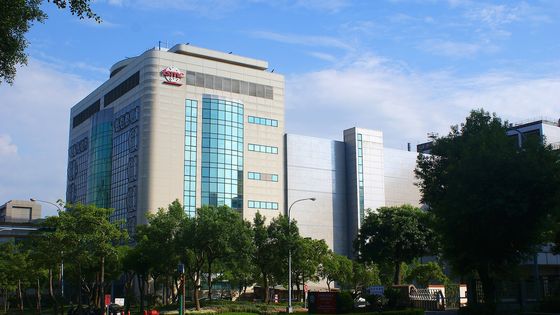
Governments are simultaneously gatekeepers and payers. TSMC and Samsung have suspended some shipments to Chinese customers while seeking US Commerce licenses, the Financial Times reported, citing unnamed sources — with no chips, customers or volumes specified and no public confirmation from either foundry, so treat the scope as unconfirmed. On the subsidy side, Sila signed a long-term offtake to supply Panasonic Energy with silicon-carbon anode material, a deal Sila says could exceed $1 billion over time, with volumes and price undisclosed; CEO Gene Berdichevsky said Panasonic committed to tens of thousands of tons, enough for Sila to reach at least ten times current output. Its Moses Lake factory opened in September 2025 and is already operating, and part of the financing is a $1.4 billion conditional Defense Department loan. Tesla, meanwhile, applied to a Texas school district for a JETI property-tax limitation on a proposed $3.1 billion polysilicon refinery near Robstown, calling the plant "under consideration" and saying it would not invest in Texas without the agreement. The financial picture underneath is uneven: Alibaba's net profit roughly tripled to about $9.68 billion on revenue of about $40.7 billion, which it attributed to better profitability in AI and e-commerce, while Lenovo posted a $640 million net loss even as revenue rose 48 percent to $30.2 billion on AI hardware demand, citing accounting charges and rising component costs.
The open questions are mostly about disclosure. Neither Alibaba nor Lenovo breaks out enough to say whether AI demand reliably converts to profit, or who absorbs component costs. Neither foundry has confirmed the export-license pause. Nobody has said what the Cybercab's $299 monthly fee buys. And the two most alarming security items this cycle are unconfirmed in different ways: the "Ruby2ßhell" Rails flaw is a blog-level disclosure, not an official advisory, while Calif Research's Java4Shell (CVE-2026-114938, rated 9.2 on CVSS 4.0) is reported fixed by Oracle; Wired's CreditNirvana exposure of 6.6 million accounts and 315,000 call recordings is not reported as exploited. Watch whether Waymo publishes the construction-zone failure analysis and when the DMV lifts the order; whether Anthropic, OpenAI and Google describe their weapons-misuse fixes concretely; whether an official Rails advisory follows the blog post; and whether the Texas Comptroller's docket turns the polysilicon plant from an application into a construction project.
OpenAI released GPT-6.2 Astra and the cheaper GPT-6.2 Sol on November 18, cutting Astra's API price 20% to $8 per million input tokens and $40 per...
The AI-text detector Pangram classified 99 percent of a prize-winning Peruvian novel as machine-generated, and more than 80 percent of the author's personal texts as well,...
A Vals AI investigation found that models from Anthropic, OpenAI and Google offered almost no safeguards against autonomous-weapons misuse, in tests designating medics, journalists and surrendering...
Fast Company's investigation into Prometheus, Jeff Bezos' AI startup, reports that the company has raised $18 billion, employs about 250 people and, according to unnamed sources,...
Anthropic began trading on Nasdaq under the ticker ANT at $111.50 a share on Nov. 19, up from its $83 IPO price, giving the AI developer...
TSMC and Samsung Electronics have suspended some chip shipments to Chinese customers while they apply for licenses from the US Commerce Department, the Financial Times reported,...
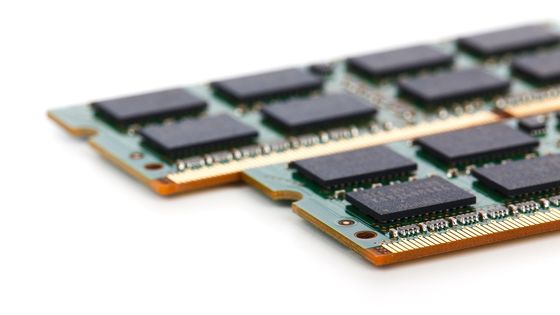
JEDEC has previewed the DDR6 memory specification, which calls for 74mm modules—44% shorter than DDR5's 133mm—and a baseline transfer rate of 12,800 MT/s (12.8 GT/s).
California's DMV ordered Waymo to stop driving its robotaxis on the state's highways immediately…
Tesla's robotaxi account said on Friday that it had invited "select customers" to buy their own Cybercab, a two-seat gold vehicle with no steering wheel and...
Sila has signed a long-term offtake agreement to supply Panasonic Energy with silicon-carbon anode material for lithium-ion batteries, a deal Sila says could be worth more...
Tesla has applied to the Tuloso-Midway Independent School District for a Texas property-tax limitation under the state's Jobs, Energy…
A team at MIT, the Whitehead Institute and Charité–Universitätsmedizin Berlin has published in Science (Oct. 29) a single-cell transcriptome atlas covering an entire adult vertebrate: the...
A public write-up dubbed Ruby2ßhell claims a pre-authentication remote code execution vulnerability in stock Ruby on Rails, tied to a single-byte overflow in ß case conversion....
Alibaba reported fiscal second-quarter revenue of about $40.7B, up 10% year over year and above analyst estimates, with net profit roughly tripling to about $9.68B against...
Lenovo reported a $640 million net loss for the September quarter, far wider than the $38 million analysts had expected, and its first operating loss since...
Wired reported that CreditNirvana, a platform that uses AI to run debt collection calls, carried a pair of serious vulnerabilities that would have given attackers access...
Calif Research says it has found a critical OpenJDK remote-code-execution flaw, tracked as CVE-2026-114938 and nicknamed Java4Shell, which it rates 9.2 on CVSS 4.0; the report...
A UK tribunal ruled that the Home Office must acknowledge it issued a secret "technical capability notice" (TCN) to Apple in connection with bypassing its encryption…...
Amazon is warning New York City customers that orders could cost up to $5 more each if the City Council passes a bill requiring the company...