AMD-specific fork of llama.cpp draws builder interest on Hacker News
An AMD-targeted fork of llama.cpp has been published and shared on Hacker News, pitched at improving local LLM inference on AMD GPUs.
AI and the frontier tech around it, explained every morning
18 stories
TSMC's 1.4nm Node Opens for Design as AI's Limits Turn Physical
TSMC says its A14 process, a 1.4nm-class node, is ready for customer design work: version 0.9 of its process design kit is available for design-in, and Cadence and Synopsys have completed full design-flow certification on an Arm Cortex-A725 CPU core using TSMC foundation IP. The company claims the node's Boost Cells deliver 14% higher performance at the same power, or 23% lower total power at the same speed, than N2P with NanoFlex, along with 50% better energy efficiency, 22% higher drawn transistor density and 23% higher logic density than baseline N2P. Those are TSMC's own figures and no independent measurements were supplied. The item also cuts off mid-sentence at the risk-production date, so the schedule is unconfirmed.
That announcement is the supply side of a story whose bottlenecks now sit elsewhere: power, optics and materials. Texas has resumed approving data-center projects after an August freeze, acting on a directive from outgoing Governor Greg Abbott's office, in a move affecting more than 1,800 projects and 474 gigawatts of power requests, according to Tom's Hardware citing the Financial Times. ERCOT has finished gathering information on how data centers affect local communities, the report said, and developers are rushing approvals before Governor-elect Gina Hinojosa, who has pledged to rein in construction, takes office in January. On the optics side, a Tom's Hardware explainer argues indium phosphide is the binding constraint on the optical links AI data centers are adopting: Sumitomo Electric and AXT account for almost 80% of global InP substrate manufacturing, with JX Advanced Metals adding roughly 10%, and AXT makes most of its substrates in China, where exports now require government licences. China produces around 70% of the world's refined indium.
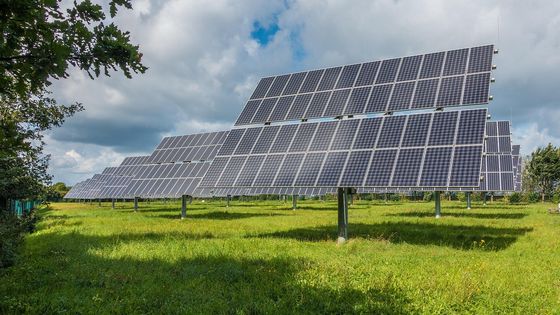
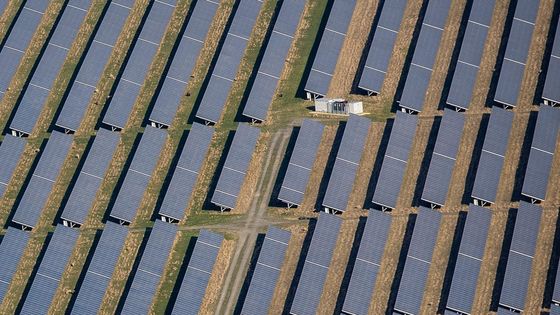
The response on the energy side is visible in the same day's stories. China's cumulative solar capacity reached about 1.33 TW at the end of October 2026, up 16.3% year on year, according to National Energy Administration figures reported by pv magazine, though October additions of 12.86 GW were 5.7% below September. Tianwan unit 8 completed hot tests and took its first fuel load, per World Nuclear News, moving into the last stage before start-up; the site is expected to become the world's largest nuclear plant once all eight units run. In Japan, MUFG Bank made initial disbursements on project finance for two grid-scale battery projects totaling 90 MW of grid-connection capacity, HEXA Energy Services said, describing them as the first loans to price in the 2023 decarbonization auction's inflation- and interest-rate-indexed contract mechanism.
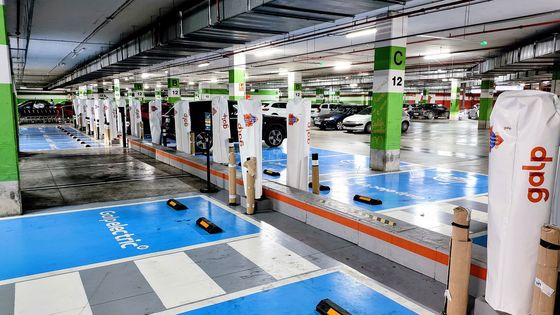
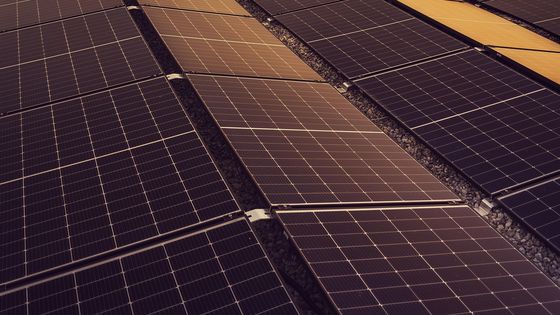
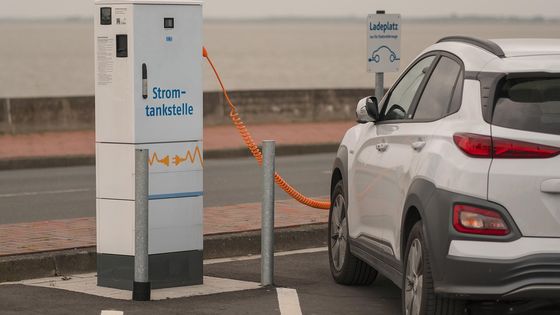
The contradictions are worth naming. Spain's Auto+ purchase incentive has exhausted the €350 million the government allocated for electric cars and plug-in hybrids, and according to electrive the pot will not be refilled "for the foreseeable future" because elections are approaching — even as charging infrastructure keeps being built, with IONNA opening a 22-bay, 400 kW California hub and extending automatic Tesla authentication. State-directed supply in China and developer-driven capacity in the US are racing ahead of retail demand policy in Europe. Two other items are best read as unconfirmed: an AMD-targeted fork of llama.cpp circulating on Hacker News, whose own benchmarks, supported GPU generations and ROCm versions, and upstreaming status are not in the material, with commenters describing a longer informal effort around used gfx906 cards from around 2018 with 32GB of HBM2; and HKUST's perovskite cell at 27.04% lab efficiency, 26.67% certified, with the certifying body undisclosed.
What to watch next: whether TSMC confirms a risk-production date and names A14 customers, which would test those density and efficiency claims against real designs; whether Texas's resumed approvals turn into interconnection agreements ERCOT can actually serve; and whether InP export licensing tightens further, since a substrate market that concentrated is where AI's optical buildout would seize first. Also watch Spain's subsidy after the election, the FCA's promised draft DeFi rules — the FT reports a plan with no scope or timetable yet — and Jiangsu's 2027 auction, whose 13 TWh framework with bids from CNY 0.200 will show how China prices new renewable capacity next to its 1.33 TW installed base.
An AMD-targeted fork of llama.cpp has been published and shared on Hacker News, pitched at improving local LLM inference on AMD GPUs.
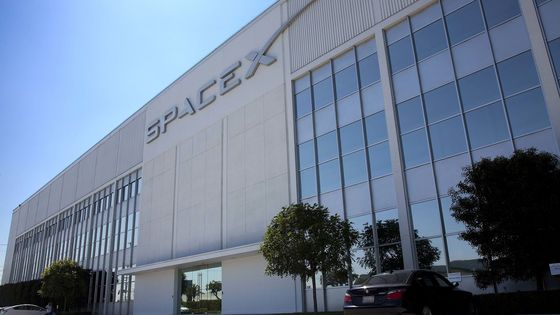
Virginia Attorney General Jay Jones and Oregon Attorney General Rayfield filed suit against SpaceX, which the announcement describes as the parent company of X and xAI…...
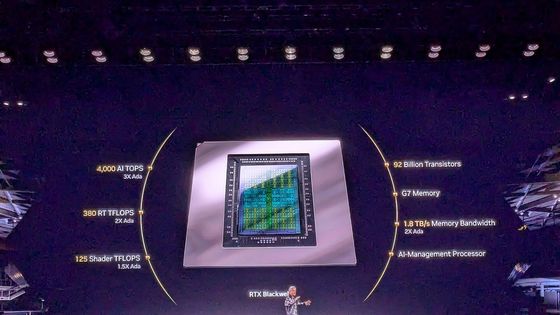
Bloomberg reported that two Chinese companies installed Nvidia's Blackwell chips in a Shanghai data center linked to Alice Huang, and that a serial number on the...
TSMC says its A14 (1.4nm-class) process is ready for customer design work, with version 0.9 of its process design kit ready for design-in and Cadence and...
Texas has resumed approving data-center projects after an August freeze, acting on a directive from outgoing Governor Greg Abbott's office that affects more than 1,800 projects...
Indium phosphide (InP), the compound semiconductor used to make the lasers and photodetectors that turn electrical data into light, is the binding constraint on the optical...
More than 20 Chinese PCB manufacturers announced major capacity expansions in the first half of 2026…
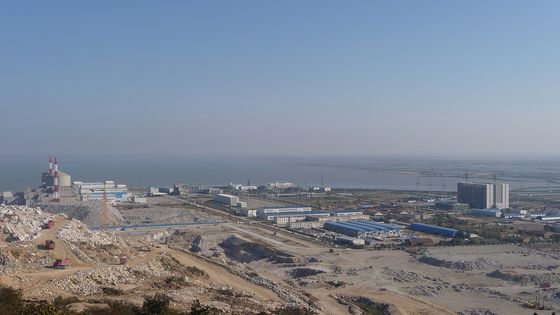
Tianwan unit 8 in China has completed hot tests — the pre-operational run-through of plant systems before the reactor is started — and received its initial...
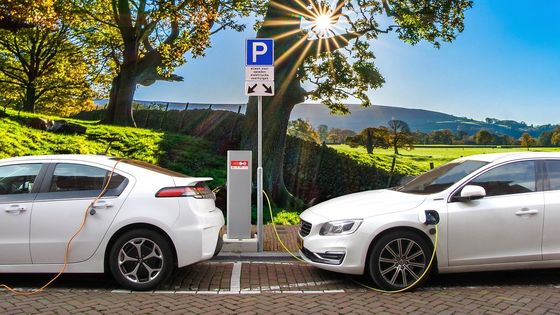
IONNA has opened a flagship charging site in Westminster, California, with 22 charging bays and peak power of up to 400 kW, according to electrive.
Spain's Auto+ purchase-incentive programme for private buyers has used up its budget after the government allocated €350 million for electric cars and plug-in hybrids over a...
MUFG Bank has made initial loan disbursements under project-finance agreements for two grid-scale battery storage projects in Japan, HEXA Energy Services said: one in Bibai, Hokkaido,...
China's cumulative installed solar capacity reached about 1.33 TW at the end of October 2026, up 16.3% year on year, according to National Energy Administration (NEA)...
Tongwei and Rezolv Energy have signed an agreement for 846 MW of Tongwei TNC 3.0 modules for the Dama Solar project in Arad County, western Romania....
Researchers at the Hong Kong University of Science and Technology (HKUST) reported a lab-scale perovskite solar cell that reached 27.04% power conversion efficiency, with a certified...
BYD unveiled the Whale, a new flagship electric minivan (MPV), claiming it can travel over 559 miles (900 km) on a single charge and recharge in...
Prevost has unveiled the H3-45 Electric, its first battery-electric motorcoach, with a 540 kWh Volvo battery, a 450 kW (600 hp) dual-motor powertrain, and CCS1 plus...
The UK Financial Conduct Authority plans to require decentralized finance (DeFi) platforms — services that run lending, trading and similar functions through smart contracts rather than...
Verizon is in talks to acquire Fidium, a fiber-optic broadband operator owned by Searchlight Capital and Canada's BCI, for about $6 billion, the Financial Times reported,...