Meta declined FCA request to test Muse before UK launch, WIRED reports
Meta declined a UK Financial Conduct Authority (FCA) request to jointly test its personal agent Muse before launching it in the UK on Tuesday, WIRED reported....
AI and the frontier tech around it, explained every morning
26 stories
A Huawei Verdict, a Memory Squeeze and AI's Ground Truth
Two American courts moved the line on corporate responsibility on the same day. A federal jury convicted Huawei Technologies on 10 of 12 counts after a trial of nearly three months, including conspiracy to steal trade secrets from US firms and evasion of Iran sanctions, with the Department of Justice listing bank fraud, wire fraud, money-laundering conspiracy and substantive violations of the International Emergency Economic Powers Act, according to Bloomberg and the DOJ release. Separately, the US District Court for Maryland ruled that Amazon is a distributor of goods sold on its marketplace, not merely a logistics provider, so it must carry out recalls for more than 400,000 "Fulfilled by Amazon" third-party products the Consumer Product Safety Commission says pose a substantial hazard — among them faulty carbon monoxide detectors and hair dryers without electrocution protection. Amazon had sued the CPSC in March 2025 to overturn the order. The verdict is the day's most consequential item, and the pair together say something narrower and more useful than either alone: courts are assigning liability for conduct companies commit and for goods they host.
The enforcement thread running through today's stories is about controlling where AI computing goes, and the quality of evidence varies sharply. The Financial Times reported, citing unnamed sources, that Nvidia told manufacturing partners to stop shipping AI servers to Malaysia, Singapore, Thailand and Indonesia, linking the move to tighter US export controls meant to stop Chinese buyers reaching compute through third countries. Neither Nvidia nor the US government has confirmed the instruction, and the report as summarized gives no effective date, no covered configurations, and no indication whether it is a license requirement or voluntary compliance. Microsoft, meanwhile, said Chinese and North Korean state-backed groups including Salt Typhoon have added an AI penetration-testing tool called ARTEX to their toolkits, per The Record, which frames it as an adoption trend rather than a single intrusion and offers no detail on targets, authorship or frequency. The attribution rests on Microsoft's own research. One of these items is an adjudicated verdict; the other two are a leak and a vendor claim, and they should not be read with the same weight.
The chip stories describe a shortage that is acute now and capacity that arrives late. The Wall Street Journal reported that a global memory shortage has driven some chip prices up as much as tenfold in a year and pushed buyers into procurement "war rooms," with component costs feeding into electronics prices; it names Blackmagic Design among affected firms but gives few specifics on chip types or regions. TSMC's Arizona subsidiary has applied to Texas's JETI program for a $22.6 billion campus in Brazos County producing 2nm-class chips, with commercial operations in 2031 and full operations in 2032 — six years after N2 entered volume production in Taiwan in Q4 2025 — and construction projected for 2027, with the school district's approval still outstanding and the Comptroller recommending approval. China's memory champions are scaling the commodity end: CXMT reported a nine-month net profit of ¥132.0 billion on ¥269.0 billion in revenue, versus a loss a year earlier, and runs three 12-inch fabs at roughly 100,000 wafers a month each, while YMTC posted ¥47.04 billion in first-quarter revenue. Neither can supply HBM, the part AI depends on.
The AI stories, read together, measure the distance between capability inside the lab and value outside it. Anthropic examined nearly 300 deployments across 58 US companies and found almost one in five still produces no business value, with the obstacles being review workloads, internal bottlenecks and employee resistance rather than difficulty learning tools — and traced the biggest hurdles to outdated company structures, though the coverage does not detail how value was measured. Google DeepMind research chief Koray Kavukcuoglu said the lab uses AI agents to run some of its own experiments for upcoming Gemini models but remains far from recursive self-improvement, and that DeepMind deliberately leaves the agents' chains of thought untrained so humans can review that reasoning. On oversight, WIRED reported that Meta declined a Financial Conduct Authority request to jointly test its personal agent Muse before its UK launch on Tuesday; the FCA warned agents could become "another force of attack." The most checkable claim in the batch is DeepMind's AlphaProof Code, which the lab says produced a complete formal proof in Lean that an Arm-compiled AArch64 binary of Signal's libsignal, plus minimal scaffolding, matches a revised specification — about 1.2 million lines of proofs plus 5.3 million to show each instruction matched models of AArch64 and Linux behavior, with agents flagging 1% of the codebase for human review.
Space supplied the day's cleanest new evidence and its plainest diplomacy. The European Space Agency's Hera returned the first close-ups of Dimorphos, showing that NASA's DART impact flattened one entire face of the moonlet into a crater spanning its full width, set it tumbling chaotically and apparently blasted out hundreds of previously unknown boulders a few meters across now circling the Didymos system. On Nov. 25, Pakistan's Muhammad Zeeshan Ali entered Tiangong as the station's first foreign visitor, flying under a February 2025 China-Pakistan agreement and staying about a week, according to the China Manned Space Agency. Hold one contradiction: Huawei is now a convicted defendant in the US and simultaneously the specified inverter supplier — 1,803 SUN2000-330KTL-H1 units — for Mexico's conditionally approved 621 MWp Cerro Colorado solar plant. In EVs, BYD installed its first, megawatt-class Flash Chargers in Malaysia alongside the Denza D9 launch and says access will extend to all brands, while Tesla raised the Cyberbeast to $114,990 and ended Cybertruck leasing without public explanation, per Not a Tesla App. Watch whether Nvidia or Washington confirms the Southeast Asian halt and its scope, what penalties follow the Huawei verdict, whether Brazos County approves TSMC's tax arrangement, and whether Hera's boulder survey revises the picture of what a kinetic impactor does.
Meta declined a UK Financial Conduct Authority (FCA) request to jointly test its personal agent Muse before launching it in the UK on Tuesday, WIRED reported....
Google DeepMind is using AI agents to run some of its own experiments for upcoming Gemini models, according to research chief Koray Kavukcuoglu, as reported by...
Anthropic examined nearly 300 AI deployments across 58 US companies and found that almost one in five still produces no business value.
On November 25, Sand.ai said it plans to release the full weights of MAGI-2, a unified audio-video generation model with 480B total parameters, "as soon as...
Nvidia has told its manufacturing partners to stop shipping AI servers to Malaysia, Singapore, Thailand and Indonesia, according to the Financial Times, which cited unnamed sources....
A global memory chip shortage has pushed companies around the world to set up procurement "war rooms" to secure supply, and some chip prices have risen...
TSMC's Arizona subsidiary has applied to Texas's JETI incentive program for a $22.6 billion fab campus on a 3,232-acre site southwest of College Station in Brazos...
China's two homegrown memory champions are scaling fast on commodity products but still cannot supply the AI-critical part.
Tesla has raised the price of the Cybertruck's top Cyberbeast trim to $114,990 and stopped offering Cybertruck leases, according to Not a Tesla App.
BYD has installed its first Flash Chargers in Malaysia, timing the deployment with the launch of the Denza D9 equipped with its second-generation Blade battery.
Mexico's environment ministry (Semarnat), through its General Directorate of Environmental and Risk Impact (DGIRA), has granted conditional environmental approval to the 621.17 MWp Cerro Colorado solar...
Mexico's utility-scale solar pipeline has kept expanding since September 10, with projects moving through environmental review, permits, equipment deals and power contracts across 15 states…
electrive's Martin Westerhoff has driven the new Mercedes-Benz GLA 350 4MATIC electric, a compact all-wheel-drive SUV built around an 800-volt architecture, an 85-kWh battery and a...
Muhammad Zeeshan Ali, a former Pakistan armed forces pilot flying as a payload specialist, entered China's Tiangong space station on Nov. 25, 2026, becoming the first...
The European Space Agency's Hera spacecraft has sent back the first close-up views of the scar left by NASA's DART impact on the asteroid moonlet Dimorphos…...
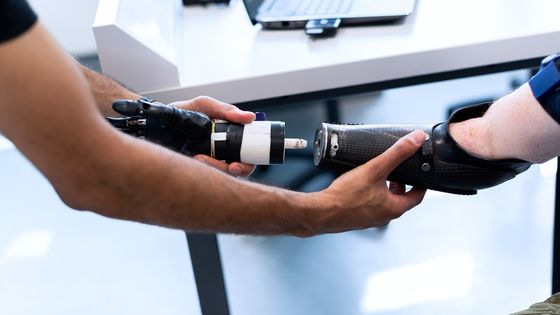
Avi Davidson, a 33-year-old trauma therapist, has become the first participant in a University of Utah clinical trial to take an experimental LUKE bionic arm home...
A US federal jury convicted Huawei Technologies on Tuesday of conspiring to steal trade secrets from American technology firms and of evading US sanctions on Iran…...
The US District Court for the District of Maryland ruled in favor of the Consumer Product Safety Commission (CPSC) in Amazon's lawsuit against the agency…
A writeup published on opensec.in under the name "nfs2root" (CVE-2026-99362) describes a pre-authentication remote root vulnerability in the Linux kernel's NFS server that the author says...
Microsoft says state-backed hacking groups in China and North Korea, including Salt Typhoon, have added ARTEX — described by The Record as a powerful AI penetration-testing...
Google DeepMind released a paper and GitHub repository describing AlphaProof Code, a framework it says produced a complete formal proof that an Arm-compiled AArch64 (64-bit Arm)...
Binance said on Thursday that its recovery work is complete and that it has fully lifted the withdrawal suspension it imposed after a record $6.3 billion...
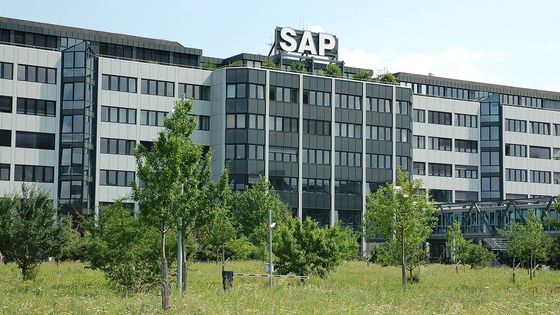
SAP is preparing a plan to eliminate at least 10,000 positions — roughly 9% of its global workforce…
Google has announced that, starting next year, many independent Android developers will have to publish a phone number and address publicly on Google Play.
US District Judge Loren AliKhan issued a preliminary injunction barring the Federal Communications Commission from conducting an early review of ABC's broadcast licenses…
A Clay AI leader explains the engineering and product tradeoffs behind its GTM agents, from coding-agent architecture and evals to model routing, post-training timing, and workload...