OpenAI's GPT-6 Astra turns physicist's lattice Standard Model strategy into proof
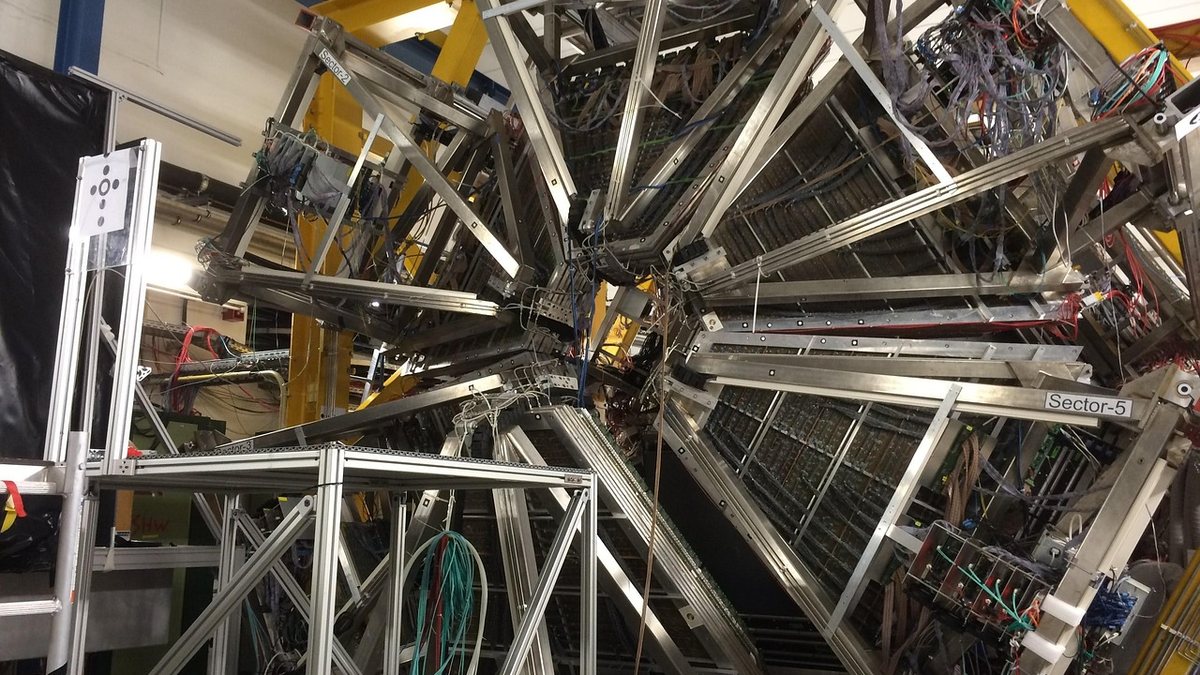
OpenAI physicist Nathaniel Craig says he used GPT-6 Astra to turn his own strategy for defining the full Standard Model on a computational lattice — a formulation problem he describes as having stumped particle physicists for more than 25 years — into a working proof. According to The Decoder’s report, the model took Craig’s strategy and produced the proof; Craig says a lot of work remains before realistic simulations are possible. The account is a thin secondary report: it links no paper, proof text, code, or independent check, and does not say how much of the derivation came from the model versus from Craig’s strategy.
Verified and unconfirmed
- Verified: OpenAI itself published an account crediting its physicist Nathaniel Craig with using GPT-6 Astra to turn his strategy for defining the full Standard Model on a lattice into a working proof, and its write-up discusses technical elements such as overlap fermions, which keep only the left-handed fermions and remove doublers. The Decoder’s report repeats this framing and quotes Craig saying much work remains before realistic simulations.
- Not yet confirmed: No primary paper or preprint, technical detail of the proof, or independent expert verification is available, so the proof’s correctness, novelty, and how much of it the model generated versus Craig rests on OpenAI’s and Craig’s word; the 25-year framing comes from the secondary report, and no timeline is given for when realistic lattice simulations of the full Standard Model might be possible.
Background
Lattice gauge theory places a quantum field theory on a discrete grid of spacetime points so that numerical simulations can be run without hitting the infinities of continuous calculations; it is the standard toolkit for strong-force (QCD) work such as computing proton masses. The Standard Model as a whole is harder: its weak interaction involves chiral fermions, whose left- and right-handed versions couple differently, and a long-established no-go result (the Nielsen–Ninomiya theorem) shows that a straightforward lattice discretization of such theories either duplicates particle species or breaks the symmetry in a way that spoils the physics. According to the report, Craig supplied a strategy for defining the full Standard Model on a lattice, and GPT-6 Astra’s role was to convert that strategy into a working proof — not to carry out a simulation.
Why it matters
For lattice gauge theorists, the practical upshot is not yet a tool but a claim to verify: because neither the proof nor the method has been published, researchers cannot build on or reproduce the result until Craig or OpenAI releases the derivation, and Craig’s own caveat that realistic simulations remain far off means the gap between a proof and usable physics is still wide.
What to watch
Watch for a preprint or peer-reviewed write-up from Craig or OpenAI containing the proof itself, since the report cites none; independent scrutiny of that document would be the first real test of the claim.
Further reading
-
[A step toward defining the Standard Model on a lattice OpenAI](https://openai.com/index/step-toward-defining-the-standard-model/)




Comments
Comments use a GitHub account and are moderated. Comment rules