Voyager 1 becomes first spacecraft to reach one light-day from Earth
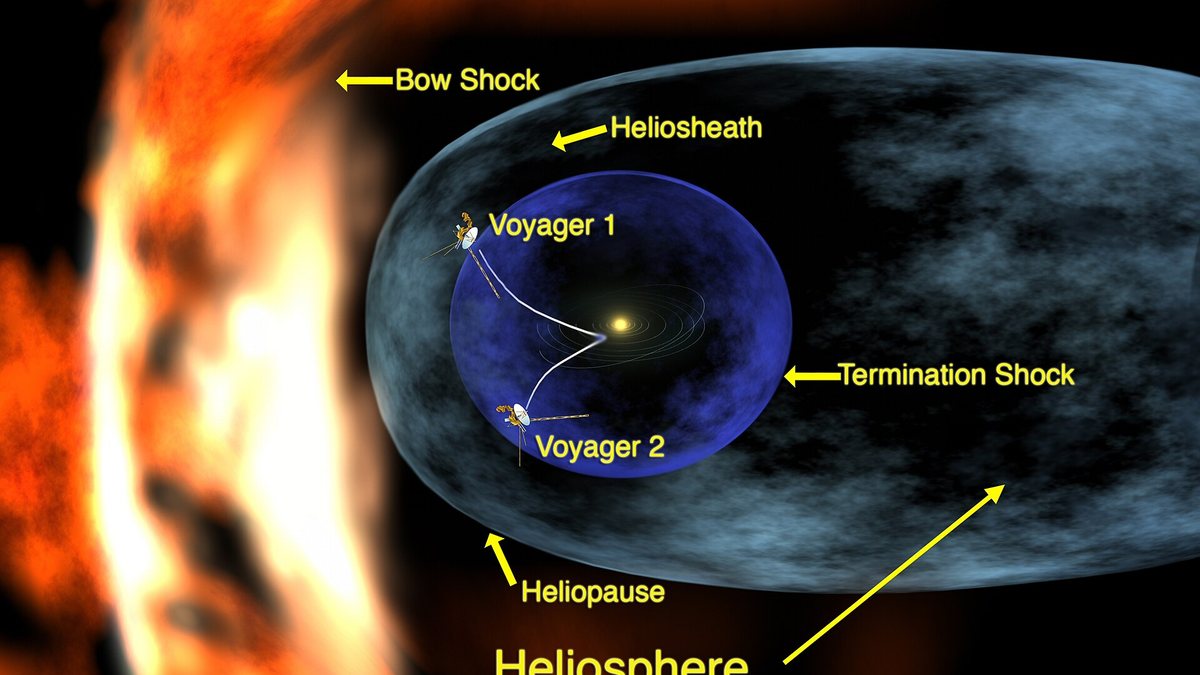
NASA’s Voyager 1 became the first human-made object to reach one light-day from Earth on Nov. 18 at 5:16 a.m. EST, at a distance of about 16.1 billion miles (26 billion kilometers) — the distance light travels in 24 hours. Because radio waves travel at light speed, commands sent through NASA’s Deep Space Network now take a full 24 hours to arrive and another 24 hours for a reply, so a command-and-response cycle lasts two days. Voyager project scientist Linda Spilker called it “a very special moment” and confirmed the spacecraft is the first to cross that threshold. The probe is moving at roughly 38,000 mph (61,155 kph) through interstellar space and remains within the Sun’s gravitational influence, so it has not left the solar system despite crossing the heliopause in 2012.
Verified and unconfirmed
- Verified: Voyager project scientist Linda Spilker told Space.com that Voyager 1 is about 16.1 billion miles away and is the first human-made object to reach one light-day from Earth; the 24-hour one-way light travel time follows directly from that distance, and the mission team communicates via NASA’s Deep Space Network.
- Not yet confirmed: Space.com does not cite a NASA press release or independent measurement, and the exact timestamp of 5:16 a.m. EST is a computed marker rather than an instrument reading; the article also rounds the distance differently in two places (“about 16 billion miles” and “about 16.1 billion miles”).
Background
A light-day is simply the distance light covers in 24 hours, which makes it a natural yardstick for a probe whose radio signals can travel no faster. Voyager 1 launched on Sept. 5, 1977, and on Aug. 25, 2012 became the first spacecraft to cross the heliopause — the boundary of the Sun’s particle bubble — into interstellar space, with Voyager 2 following in November 2018. Nearly five decades on, both probes still return science data, though the team has had to shut down some instruments to conserve power.
Why it matters
The growing lag changes how the mission is run: any command now needs a day to arrive and two days before confirmation returns, so the team must plan sequences and respond to anomalies on a multi-day cycle rather than in near real time. The data still matters closer to home — scientists on NASA’s Europa Clipper mission say Voyager 1 and 2 images remain, for some parts of Europa, the best pictures available.

Comments
Comments use a GitHub account and are moderated. Comment rules