BepiColombo reaches Mercury orbit but short thruster burn points to software glitch
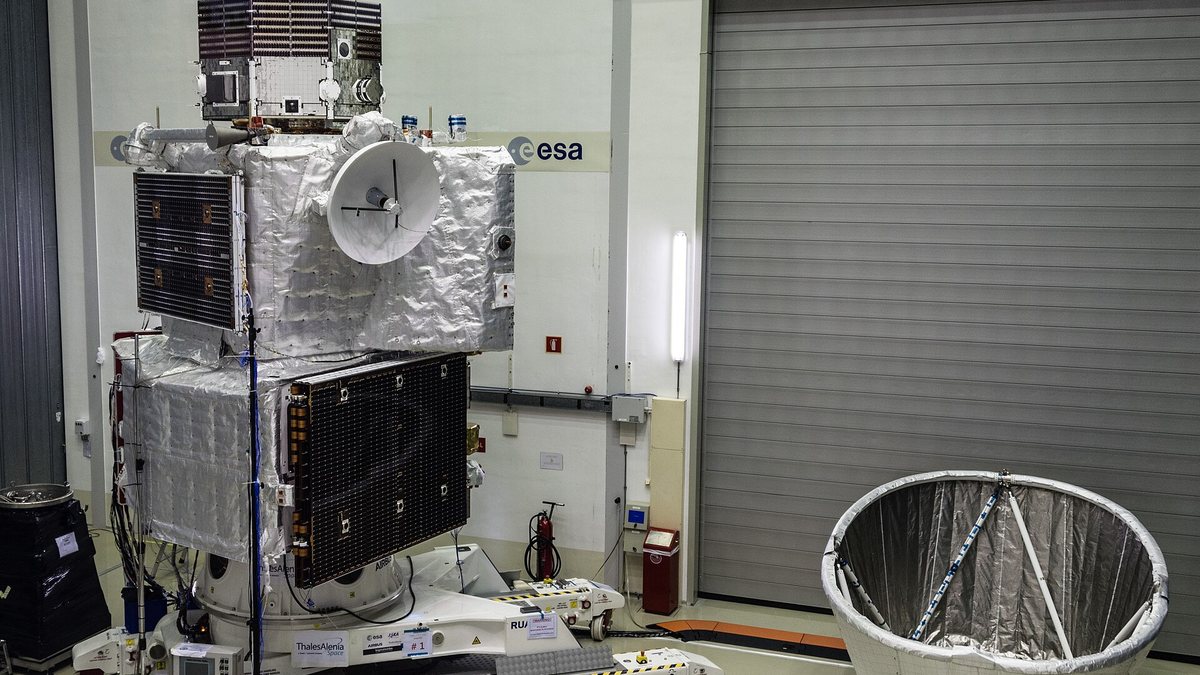
BepiColombo fired its thrusters at 18:24 UTC on Saturday, Nov. 21, for a planned 37-minute burn to enter orbit around Mercury, and ESA confirmed at 01:02 UTC on Nov. 22 that the spacecraft’s signal had been received and that it was in orbit — hours after the expected 21:37 UTC acquisition of signal. Follow-up statements reported by NASASpaceflight say the thrusters fired for a shorter time than planned because of a software issue, but that the mission’s trajectory was designed with enough margin that little corrective action is needed before the two-spacecraft stack can carry out its science mission. The orbit insertion caps a journey that began with an Oct. 20, 2018 launch and included nine gravity-assist flybys — one at Earth, two at Venus and six at Mercury — and an arrival slip from December 2025 to November 2026 after 2024 thruster problems. The anomaly’s cause and the precise resulting orbit have not been detailed in the account available so far, and the report is secondary coverage rather than an ESA or JAXA statement.
Verified and unconfirmed
- Verified: ESA confirmed that BepiColombo’s signal was acquired at 01:02 UTC on Nov. 22 and that the spacecraft was in orbit around Mercury after a planned 37-minute orbit-insertion burn; ESA later said the burn was shorter than planned because of a software issue, according to NASA Spaceflight’s account and ESA statements cited by Wikipedia and European Spaceflight.
- Not yet confirmed: the exact nature of the software fault, how much of the burn was lost, the resulting orbit parameters, and the corrective maneuver plan; the statement that little correction will be needed rests on mission-team assessments, and no independent orbital tracking or detailed ESA/JAXA anomaly report is cited.
Background
BepiColombo is a joint ESA–JAXA mission made up of two stacked orbiters — ESA’s Mercury Planetary Orbiter and JAXA’s Mercury Magnetospheric Orbiter — that launched in October 2018 and only reached Mercury after nine gravity-assist flybys: one at Earth, two at Venus and six at Mercury. The arrival had already slipped from December 2025 to November 2026 after thruster problems blocked a trajectory-correction maneuver in April 2024, which is why the approach was designed with margin to tolerate off-nominal burns.
Why it matters
Because the shortfall was absorbed by pre-built trajectory margins, the near-term consequence is mainly operational: teams will need to confirm the actual orbit and work through the software fault before commissioning the Mercury Planetary Orbiter and Mercury Magnetospheric Orbiter for science. For scientists planning to use BepiColombo data, the open question is whether any residual orbit error eats into observing time or requires a correction burn.
What to watch
Watch for ESA and JAXA to publish the post-insertion orbit determination and an explanation of the software fault, and for confirmation that spacecraft commissioning and the science phase begin as planned.


Comments
Comments use a GitHub account and are moderated. Comment rules