NariQ ships 3-bit Qwen3.8-27B quantizations claiming near-BF16 quality
NariQ has published 3-bit, 2.5-bit and 2-bit GGUF quantizations of Qwen3.8-27B, with the 3-bit file roughly 10 GB and the authors claiming near-BF16 quality across agentic,...
AI and the frontier tech around it, explained every morning
27 stories
Musk merger talks headline a day about who controls AI and energy
The day's biggest story is a deal that may not exist yet. The Financial Times reported, citing unnamed sources, that SpaceX and Tesla are negotiating an all-stock merger valued at $3.5 trillion — which would be the largest merger on record if completed. According to the report, two special committees, board groups meant to handle conflicts, are overseeing the talks; they are made up of five directors described as "disinterested," all of whom have ties to Elon Musk. The report gives no timeline and no regulatory-review details, and neither company has confirmed anything, so both the valuation and the all-stock structure should be treated as unconfirmed.
The rest of the AI and chip news shares one theme: control over scarce inputs, and the workarounds being built around them. The US Commerce Department added Apex Enterprise Solutions, a Singapore-based Alibaba subsidiary, to its Entity List alongside distributor Megaspeed and five affiliates, Bloomberg reported, citing a filing. Listing means US suppliers need a license before exporting controlled goods, including advanced AI chips. The report gave no effective date, no full list of covered items and no comment from Commerce or Alibaba. In the same stretch, NariQ published 3-bit, 2.5-bit and 2-bit GGUF quantizations of Qwen3.8-27B, with the 3-bit file roughly 10 GB. In the release's own benchmark table, the 3-bit and 2.5-bit files match or slightly beat BF16 on DeepSWE (41.0 and 41.9 versus 39.8) and Terminal-Bench 2.1 (63.8 and 60.2 versus 62.6), while the 2-bit version drops to 28.6 on DeepSWE and 86.0 on AIME 25+26 against 97.7. The authors call it the first 3-bit-or-lower quantization to hold BF16-level performance on long-horizon agentic tasks — their claim, from their own table. AWS, meanwhile, launched Strands Decider v2, five open "decision models" built on Google's Gemma 4 under Apache 2.0 and ranging from 2 billion to 31 billion parameters, per The New Stack; that report includes no benchmarks, so capability remains unverified. Smaller models and permissive licenses are a hedge against exactly the kind of export constraint that just landed on Alibaba's Singapore route.
A second thread is personal data as the product — and the trust it assumes. Google is extending "Personal Intelligence" in Search's AI Mode to Google Drive, Google Wallet and the Gemini app, TechCrunch reported, so answers can reflect a user's documents and payment or pass information rather than only public web content. The report does not say how the data is accessed, which countries or account types get it first, or what controls let a user disconnect a source. Meta rolled out its personal agent Muse to adults in the UK, which Politico described as the first AI agent from a Big Tech company to launch in that country; the report does not say which tasks it handles, what it costs or which platforms it runs on, and notes that UK regulators will watch the rollout closely. Set against that: WIRED's report that two unsecured databases exposed 3.5 billion usernames, passwords and documents, a figure from the reporting itself with no independent verification and no named operators; and Wired's report, citing anonymous sources, that Google retracted key parts of years of work making Maps more accurate for Palestinians in the West Bank, including checkpoint mapping, after Israeli pressure. Wired did not specify which features were removed, when, or who ordered it, and there was no on-the-record Google response. Personalization pitches rest on precisely the trust these stories test.
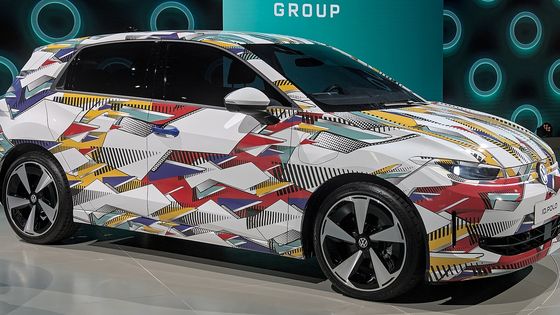
The energy and transport stories describe demand outrunning supply, with measurable consequences. ACEA figures show battery-electric cars at nearly 30% of EU passenger car registrations in October, 280,000 units, 61% more than a year earlier; the report gives no country-by-country or model breakdown. Volkswagen Group underestimated demand for its small EV family — the ID. Polo, Cupra Raval and Škoda Epiq, built at Martorell in Spain at roughly 1,000 cars a day. InsideEVs' headline cites waits near two years, while the electrive report behind it says ID. Polo buyers sometimes wait more than a year; the two accounts are not reconciled and no order-book figures are published. Separately, peer-reviewed research in Social Science & Medicine by Yi-Chun Ko and Shinsuke Uchida estimates residential solar adoption in Japan cut excess deaths on extremely hot days by about 8.2% a year for the general population and 8.5% for people 65 and older, using the 2011 earthquake and nuclear shutdowns as a natural experiment, with electricity prices up as much as 38%, a national solar subsidy, and 2009-2014 monthly mortality from 44 prefectures.
The open questions are mostly about evidence. The merger report's governance detail — five directors described as disinterested, all with Musk ties, per the FT — is the part a shareholder or regulator would press hardest, and nothing is on file. NariQ's benchmarks are self-published, the 3.5 billion credentials figure is unverified, and the two wait-time accounts for the ID. Polo conflict. Watch whether Tesla or SpaceX say anything on the record or file anything; whether Commerce publishes an effective date and item list for Apex; whether outside labs reproduce the 3-bit results on agentic tasks; what UK regulators say about Muse; and how fast Martorell's line ramps against the backlog Volkswagen now says it has.
NariQ has published 3-bit, 2.5-bit and 2-bit GGUF quantizations of Qwen3.8-27B, with the 3-bit file roughly 10 GB and the authors claiming near-BF16 quality across agentic,...
Google is extending "Personal Intelligence" in Search's AI Mode — the personalization layer that lets the assistant draw on a user's own context — to Google...
Meta has rolled out its personal AI agent Muse to adults in the UK, with Politico describing it as the first AI agent from a Big...
AWS on Monday launched Strands Decider v2, a family of five open “decision models” that The New Stack reports are built on Google’s Gemma 4 and...
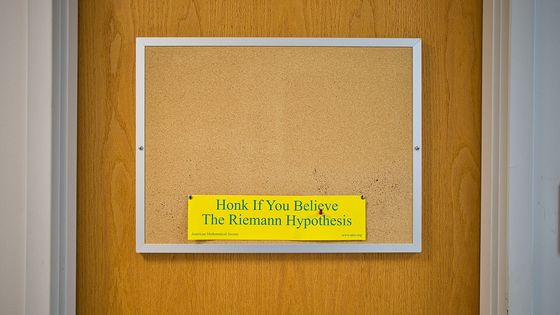
News reports last week said a mathematician used AI to help produce a proof of the Riemann hypothesis…
PrismML's Ternary Bonsai 2.5 27B — a 27-billion-parameter model with ternary-quantized weights, meaning most values are compressed to -1, 0 or +1…
Tidal will ban music made entirely by AI starting December 9, removing its existing AI-labeled catalog — reported at 27 million to 29 million tracks —...
Anthropic says its SDK for the Model Context Protocol (MCP, an open standard for connecting AI models to external tools and data) now exceeds 700 million...
Anthropic is rolling out a beta feature called “Install as app” that turns Claude artifacts—interactive outputs generated in Claude chats, such as small apps or visualizations—into...
Wired reported that Anthropic has detailed Siren, a honeypot evaluation that tests whether AI agents will try to escape a sandbox—an isolated environment used to limit...
The US Commerce Department added Apex Enterprise Solutions, a Singapore-based subsidiary of Alibaba Group, to its Entity List, alongside Singapore-linked distributor Megaspeed and five affiliates, Bloomberg...
Dell reported third-quarter revenue of $54.94 billion, up 103% from a year earlier and above the $49.32 billion analysts had estimated, Reuters reported.
Volkswagen Group underestimated demand for its new family of small electric cars, and buyers are now waiting well over a year for delivery.
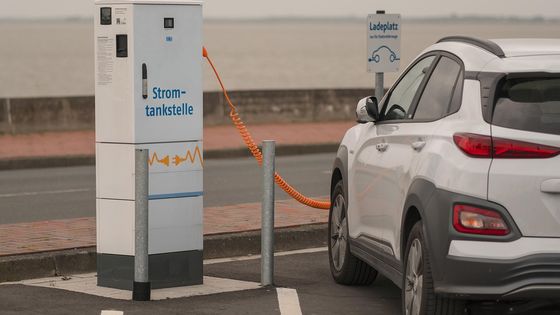
Battery-electric cars accounted for nearly 30% of EU passenger car registrations in October, with 280,000 units registered…
Peer-reviewed research in Social Science & Medicine by Yi-Chun Ko and Shinsuke Uchida estimates that residential solar adoption in Japan reduced excess deaths on extremely hot...
BYD confirmed on November 24 that it has entered exclusive negotiations to acquire Ineos Automotive's car plant in Hambach, France.
Ars Technica drove a prototype of Porsche's first all-electric sports car, the 718 Boxster, which the company says will be fully revealed next year.
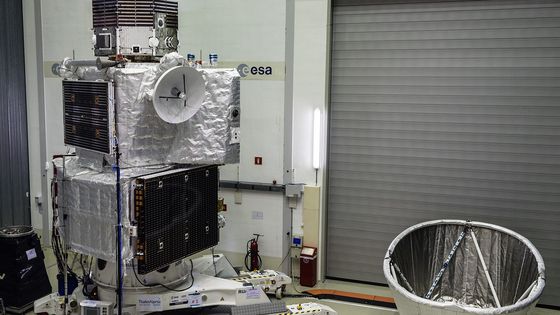
BepiColombo fired its thrusters at 18:24 UTC on Saturday, Nov. 21, for a planned 37-minute burn to enter orbit around Mercury…
China plans to launch Shenzhou-24 to the Tiangong station no earlier than Nov. 25 at 00:18 UTC from the Jiuquan Satellite Launch Center, with a three-person...
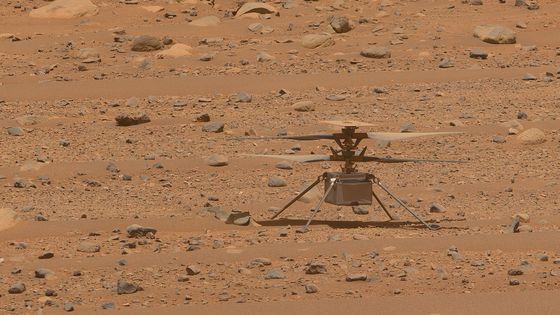
NASA's Perseverance rover and Odyssey orbiter have suspended science operations after separate technical problems, leaving two of the agency's four active Mars missions offline.
The Financial Times reported, citing unnamed sources, that SpaceX and Tesla are negotiating an all-stock merger valued at $3.5 trillion, a combination that would be the...
Wired reported, citing anonymous sources, that a Google product manager spent years updating Google Maps to serve Palestinians in the West Bank more accurately—including mapping Israeli...
WIRED reports that a pair of unsecured databases exposed 3.5 billion usernames, passwords and documents belonging to hundreds of millions of people — data the outlet...
Ladybird, an independent browser built on an engine written from scratch, is now available in alpha for macOS and Linux, developer Andreas Kling announced.
A federal jury in New York on Tuesday convicted Huawei and its subsidiaries of conspiracy to steal trade secrets and bank fraud, while acquitting the Chinese...
GreyNoise says it is tracking an active intrusion campaign against Check Point security management servers, putting the administrative control point of customers' security deployments at the...
Microsoft has declared an internal “Code Red” overhaul of its engineering response practices after a November 12 outage cut access to Exchange Online, Teams and Outlook...