Zhipu's GLM-5.4 runs 28 layers twice in a 750B 'Loop Transformer'
Z.ai has published the release note for GLM-5.4, a 750-billion-parameter flagship model built on what the company calls its first "Loop Transformer": 28 of its layers...
AI and the frontier tech around it, explained every morning
42 stories
Starship's second-stage catch, and the rising price of everything else
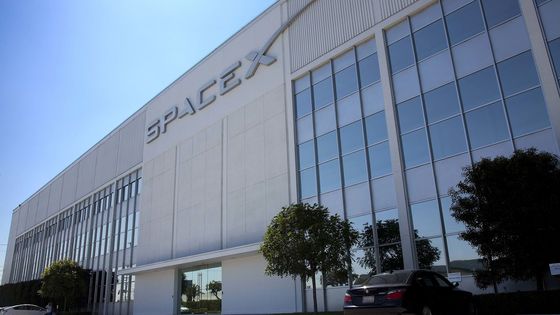
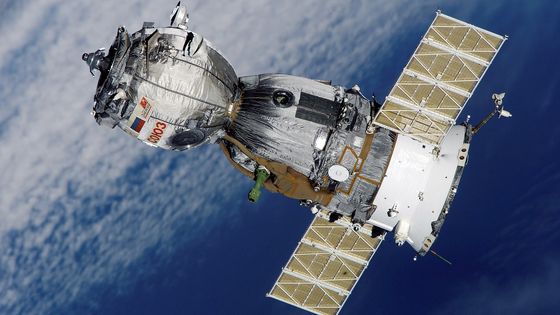
SpaceX caught Starship's upper stage with the launch tower's mechanical arms on November 14 (US Central time), which GeekPark describes as the first engineering validation of recovering an orbital-class heavy spacecraft — the first successful second-stage recovery. GeekPark's argument is about cost rather than spectacle: it separates booster return, which begins at roughly 2 km/s and takes 6–7 minutes, from ship re-entry at about 7.8 km/s and roughly 30 minutes, and says full reusability at scale would lower the price of moving mass to and from orbit. That is a claim about a future price, not a published price. China, meanwhile, has laid out its own sequence toward a crewed lunar landing before 2030, with three uncrewed precursor missions first; Wang Xiang, deputy chief designer of the human spaceflight program, presented the plan at a Beijing symposium that opened October 31, and the first, Mengzhou-1, has slipped to early 2027.
The first connecting thread is that the binding constraint in both space and AI is increasingly the cost of moving things — mass to orbit, memory to accelerators, power to data centers. The Financial Times reports buyers of data-center servers being billed up to 45% more than prices agreed months earlier, with memory-heavy CPU nodes doubling or tripling and GPU servers up 20–30%, attributed to the DRAM shortage; one buyer called the gap "disconcerting" and said they absorb it rather than walk away. Amazon reportedly agreed to pay about $7.5 billion for much of Decart, including its optimization software and founding team, a deal Bloomberg reported from one unnamed source and neither company has confirmed; TechCrunch framed it as strengthening the stack behind Amazon's Trainium chips as Amazon prepares to sell that silicon externally. And the New York Times reports, citing unnamed sources, that Elon Musk told SpaceX staff the company is falling behind in AI and that renting data-center capacity to outside customers, including Anthropic, is more lucrative than using it internally — unconfirmed by either company. Penguin Solutions' SC26 demonstration of a photonic memory appliance, adding 576 GB of HBM3E and 16 TB of DDR5 over optical CXL with a 7.2 TB/s bidirectional target, points at the same pressure, but it is a demonstration, not a product shipment.
The second thread is verification. OpenAI's GPT-6.2 Astra independently produced a Lean proof of Smoktunowicz's gap theorem that Vals AI, cited by The Decoder, calls the first machine-verifiable proof of the result by any AI; because the needed foundations were absent from Lean's Mathlib, the model devised its own strategy rather than assembling lemmas, and it leads Autoform-Hard with 49 of 56 tasks. The report is secondary and does not describe prompting or review. That matters because a blog post at micjm.com arguing a 17-million-line Lean proof is unusually large set off a Hacker News debate over whether proofs that size can be trusted; commenters warned errors could hide in converted sub-proofs, and a claim the artifact was cut to 13 million lines was not independently verified. METR's updated time-horizon plot sharpens the worry: it reports some capabilities still improving exponentially while models do worse on tasks requiring judgment than on coding, including new open-ended tasks such as designing evaluations and scoring philosophical arguments.
The third thread is that rules are being written by courts, state attorneys general and product settings rather than legislatures. Oregon and Virginia's attorneys general sued several Musk companies, alleging Grok shipped with safeguards too weak to prevent sexualized imagery of real people including children; Wired reported the filings, which have not been tested in court, and the report does not name the defendants or courts. OpenAI chief scientist Jakub Pachocki proposed on November 22 that companies adopt common development limits using a cross-company metric such as perplexity, disclosing internal figures of about 0.99 for GPT-3.5 and 0.91 for GPT-4, with new cyber and math capabilities appearing below 0.8 — a proposal, not a policy. Walmart's live Agent Gateway, with Meta's Muse as first shopping agent, puts spending limits and purchase approval inside a customer's account, a private substitute for rulemaking. Elsewhere: a Dutch court's interim order stops BYD building or selling the Ti7 in the EU pending trial; the EU Council signals support for voluntary rather than binding corporate EV quotas, per electrive; the Senate passed 62-33 a permitting overhaul letting sponsors of 46 project types sue agencies over bad-faith denials or delays past 60 days; and Rest of World reports IBM ended visa sponsorship for some US employees while offering overseas relocation.
The contradictions are worth holding onto. Zhipu's GLM-5.4 is a 750-billion-parameter model whose 28 twice-computed layers the company says match 2–3 trillion-parameter systems, but the only published benchmark scores come from a 30B test model, and access is gated. Amazon–Decart is a single-source report. Starship's cost case is an argument about what full reusability would do, not a measured price. Watch whether Zhipu releases flagship benchmarks and opens access; whether Amazon confirms Decart and names external Trainium customers; whether the 17-million-line Lean artifact gets an independent audit; how fast Starship flies again; whether Mengzhou-1 holds early 2027; and whether BYD appeals the Dutch order or the EU quotas stay voluntary.
Z.ai has published the release note for GLM-5.4, a 750-billion-parameter flagship model built on what the company calls its first "Loop Transformer": 28 of its layers...
Amazon has agreed to acquire much of AI startup Decart, including its Decart Optimization Stack software along with its founding team and AI researchers, for roughly...
OpenAI's GPT-6.2 Astra independently produced a Lean proof of Smoktunowicz's gap theorem that, according to The Decoder citing the evaluation firm Vals AI, is the first...
The attorneys general of Oregon and Virginia have sued several of Elon Musk's companies, alleging that the Grok chatbot was shipped with safeguards too weak to...
A blog post at micjm.com argues that a 17-million-line Lean proof is unusually large and examines the implications for review and correctness.
Sierra, the enterprise customer-experience company co-founded by former Salesforce co-CEO Bret Taylor, said on Monday that it raised $1.75 billion in a Series F round.
Walmart is rolling out a live implementation of the Agent Gateway it announced last month, and Meta's Muse AI agent is the first shopping agent using...
Elon Musk told SpaceX employees that the company is falling behind in AI and that renting out computing capacity from its data centers to outside customers...
METR, the AI evaluation nonprofit, has published a new version of its widely shared "time horizon" plot, which measures how long a task a model can...
OpenAI chief scientist Jakub Pachocki posted a proposal on November 22 for AI companies to adopt common limits on advanced model development, using a cross-company metric...
OpenAI is switching ChatGPT's chat tab to a new default model, GPT-6.2 Sol, and rolling it out worldwide.
Google DeepMind published a research blog post describing the use of agent teams — multiple AI agents working together — combined with formal verification to improve...
Anthropic announced Claude Ship, a developer product that lets Claude agents review, fix and approve GitHub pull requests, with two new agents — PR Steward and...
Reuters reported, citing unnamed sources, that US President Donald Trump and Vice President JD Vance personally intervened in Nvidia's decision to reinstate Jensen Huang as CEO...
Anthropic's public formal-math repository now hosts a Lean formalization claiming that VP ≠ VNP over every field, separating two algebraic complexity classes that are analogues of...
Google's AI Mode in Search can now draw on data from Google Drive and Google Wallet to personalize its answers, and the same Personal Intelligence capability...
GeekPark argues that ByteDance's Doubao phone strategy has hit an ecosystem wall: Doubao can book a Caocao ride, but it cannot tap send on a WeChat...
Penguin Solutions demonstrated a MemoryAI Photonic Appliance at SC26 that adds up to 576 GB of HBM3E and 16 TB of DDR5 to AI systems over...
Trading and financial-services firms buying data-center servers are reportedly being billed up to 45% more than the prices agreed months earlier, with memory-heavy CPU nodes doubling...
Senate Banking Committee Chairman Tim Scott said in a statement that Nvidia CEO Jensen Huang will testify publicly before the panel on December 3, Bloomberg reported....
The US Commerce Department reportedly added Megaspeed to its Entity List on Monday, Semafor reported, citing unnamed sources.
Volkswagen intends to export roughly 300,000 vehicles built in China each year by 2030, Electrek reported, framing the move as leaning into Chinese manufacturing rather than...
A Dutch court has ordered ten BYD subsidiaries, in interim proceedings, to stop building and selling the Ti7 in the EU, ruling that the model looks...
The EU Council appears to be siding with the European Parliament in favour of turning proposed binding electric-vehicle quotas for corporate fleets into voluntary targets, according...
BMW has begun series production of the iX4 at its Debrecen plant in Hungary, where the iX3 is already built, making the coupé-styled electric SUV the...
The US Senate voted 62-33 last week to pass the Bipartisan American Affordability and Jobs Act of 2026 (BAAJA), attached as an amendment to H.R. 2347,...
New York Governor Kathy Hochul announced that the state has completed its Master Plan for Responsible Advanced Nuclear Development, a roadmap intended to reach a target...
Aachen-based battery recycling startup Cylib is acquiring BASF's battery recycling business, a deal that covers two sites in Schwarzheide (Brandenburg) and BASF's North American recycling operations....
Jordan's Ministry of Energy and Mineral Resources said at the inaugural Jordan-EU Investment Conference last week that it will invite private investors early next year to...
Saudi Arabia's Electricity Regulatory Authority (SERA) has replaced the 2 MW ceiling on renewable self-consumption systems with a 50 MW cap, and the updated framework explicitly...
SpaceX's Starship returned from an orbital flight and was caught by the launch tower's mechanical arms on November 14 (US Central time)…
China's human spaceflight agency has laid out its most detailed sequence yet for putting astronauts on the Moon before 2030, presented by Wang Xiang…
Western intelligence officials are concerned that Russia could launch a nuclear-armed satellite into orbit before the end of the year, German media reported Monday…
Australia-based Myriota, which sells low-cost, low-power satellite connectivity for industrial IoT devices, raised roughly $40 million in a first close of its Series C round, the...
Kymera Therapeutics reported Monday that its oral STAT6 degrader KT-621 — a pill designed to break down the STAT6 protein…
The FDA on Monday approved BridgeBio's Welgemda (ribitol), the first drug cleared to treat limb-girdle muscular dystrophy…
An MIT team led by McGovern Institute investigator Evelina Fedorenko and lead author Andrea Gregor de Varda built "encoding models"…
The US Department of Justice is seeking forfeiture of more than $1 billion in cryptocurrency that hackers linked to North Korea stole from Binance Holdings, according...
IBM has told some of its U.S.-based immigrant employees that it is ending visa and green-card sponsorship, and is offering relocation to another country as an...
CrowdStrike has announced plans to acquire Zscaler for $44 billion, a deal that would fold a major standalone zero-trust security vendor into the endpoint-security company.
Nvidia's board voted unanimously on November 23 to reinstate Jensen Huang as president, CEO and director, effective immediately, 11 days after he resigned.
The Ladybird project released its first alpha on 23 November 2026, so macOS and Linux users can now install the browser without compiling it themselves.