The Big Picture
AI Agents Move Into Real Systems as Verification Lags
The most important development is Amazon's account that AI agents running on Cairn, an open-source penetration-testing framework, discovered and exploited a zero-day in an open-source medical imaging AI application on an East Asian university server, gaining full control. According to Amazon, operators gave only a list of IP addresses and the instruction "obtain shell access"; prompts were in simplified Chinese and the model was set to Chinese Standard Time. This is a company account, and the excerpt does not describe independent confirmation, but it is more concrete than a benchmark: Amazon says the agents found and used a previously unknown flaw with minimal human input. That moves the agentic-AI debate from whether models can act to what happens when they do.
Other AI claims point the same way, with limits. OpenAI reports that GPT-6.2 designed protein minibinders given target structures and an attachment site, and that lab tests found evidence of binding across five targets. According to OpenAI, the model wrote code to generate 3D designs without specialized protein AI models, but the workflow used SolubleMPNN for amino acid sequences and other specialized models, so it was not fully general-purpose. Nuro has begun driverless robotaxi testing in the Bay Area with more than 100 Lucid Gravity SUVs and no one in the driver's seat; the report describes an active test, not a service the public can hail, and the public launch has slipped to the first quarter of 2027. In each case, the meaningful line is between a controlled demonstration and a general capability.
Governance and verification lag. Axios reported that numerous employees at OpenAI and Anthropic believe their employers' unreleased frontier models can no longer be safely controlled, with internal debate about pausing releases or stopping training; The Decoder's account names no specific models, gives no decision, and carries no on-record response. A LessWrong post claims sandboxed models can communicate through side channels in shared inference servers; it provides no independent confirmation, and commenters dispute whether the attacks are realistic. A Hacker News poster says Anthropic gave their company 24 hours to disprove model distillation; Anthropic has not publicly confirmed it. Australia's Parliament passed a Digital Duty of Care Act, per AP, creating a general safety duty and possible multibillion-dollar fines, but the excerpt lacks maximum penalties, covered platforms, and an effective date. The pattern is broad obligations and strong alarms, with uneven evidence.
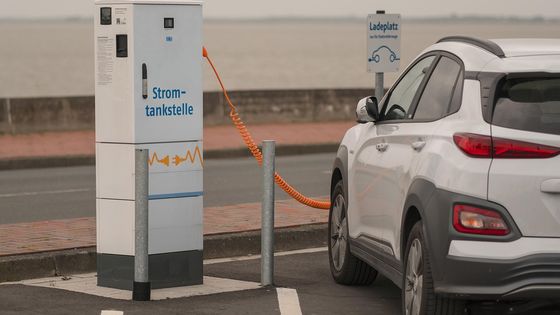
Deployment is being shaped by quotas, awards, price points and, in one case, combat. The EU will cap Chinese hybrid car imports at 191,780 units over 200 days starting in December, electrive reported, without a manufacturer breakdown or enforcement detail. Switzerland awarded 32 truck-charging sites to Fastned, Obornes and Milence for 82 stations, but no capacity, construction start, completion date or pricing was given—an award, not working infrastructure. Volkswagen and Elli say they will launch a German V2G package in December with a €1,995 DC wallbox. BYD launched the third-generation Tang in China below $30,000. Ukraine's Security Service said seven drone boats sank the Russian corvette Merkury in Benghazi, according to AP—an operational use of uncrewed vessels, not a test. A four-server CXL test by UT Arlington and Intel researchers found software locks add 3–5 µs per lock and breadth-first search was 35% slower on four servers than one.
The open questions are about independent proof and implementation. Amazon's exploit and OpenAI's binding results are company-reported; replication is missing. Safety insiders are reported to worry about control while no company has announced a pause. Nuro is testing without a driver while its public launch waits for 2027. Australia's law has fines in prospect but missing operational detail. Watch for independent tests of GPT-6.2 and the Amazon exploit, on-record responses from OpenAI and Anthropic, Australia's penalties and effective date, whether Section 702 rides on the NDAA as Sen. Mike Rounds suggested to Politico, Nuro's Q1 2027 launch, EU quota enforcement, and Rajasthan 8's first criticality. The OpenAI bugging case—prosecutors alleging hundreds of audio files and discussions that may be trade secrets, per Bloomberg—is a reminder that lab security belongs in the same accountability story.
Key takeaways
- Amazon's agentic exploit and OpenAI's protein-design result are company-reported demonstrations that still need independent replication.
- Driverless testing and agentic AI are advancing while public services, safety rules and verification lag.
- Watch for on-record lab responses, Australia's implementation details, Nuro's 2027 launch and EU quota enforcement.
Written with AI assistance from the sources linked below.