Reflect Orbital raises $73.5M, plans first orbital mirror test for 2027
Reflect Orbital, a California-based startup, has raised $73.5 million in new funding—bringing its total to more than $100 million—and says it has received a formal go-ahead from the U.S. government to test sunlight-reflecting mirrors in orbit. The company is preparing its first test satellite for launch in the second quarter of 2027 and has bought two launches from India’s Skyroot Aerospace, though it has not named the provider for the first satellite. In October, it ran a permitted ground demonstration near Lone Pine, California, using spotlights to simulate a roughly 0.7-lumen illumination spot for search-and-rescue volunteers. The orbital service, intended to extend solar-farm output and provide lighting for emergency responders after dark, remains prospective: no mirror has yet been shown working in orbit, and the article’s body says the first test satellite is targeted for Q2 2027 while a photo caption says the Earendil-1 demonstration satellite is slated for 2026.
Verified and unconfirmed
- Verified: Reflect Orbital announced $73.5 million in new funding on Nov. 10, 2026, bringing its total raised to more than $100 million, according to the company’s own announcement (tool-2-1). The company also says it has obtained a U.S. government go-ahead to test the concept and that its ground-based illumination test near Lone Pine, California, on Oct. 10 was fully permitted and coordinated with local rescue groups, as Space.com reports.
- Not yet confirmed: The launch date is contradictory across the sources — Space.com’s text says the first test satellite is expected in the second quarter of 2027, while a photo caption in the same article says Earendil-1 is slated for 2026, and a third-party tracker (tool-2-2, tool-2-3) lists a 2026 launch on a Falcon 9 rideshare with no confirmed date; Space.com says the launch provider is being kept under wraps. No orbital demonstration of the beaming capability has occurred — the 0.7-lumen spot was produced by ground-mounted spotlights simulating the service — and the brightness, cost, and availability of actual space-delivered light remain unverified.
Background
Reflect Orbital’s concept is to bounce sunlight from mirrors in Earth orbit onto a small patch of ground after dark, providing illumination without ground infrastructure for search-and-rescue teams and extending generation for solar farms. The company has so far tested the service only by simulating it with mobile spotlights in California. The two launches it has purchased are on Skyroot Aerospace’s Vikram-1, which in July 2026 became the first privately developed Indian rocket to reach orbit.
Why it matters
Reflect Orbital says search-and-rescue and disaster-response teams will be its first customers, and the October test with the China Lake Mountain Rescue Group was meant to show how a controlled spot of light could support night operations without ground infrastructure. Because the service is not yet available, those agencies cannot count on orbital lighting until the 2027 test satellite flies and its illumination is independently measured.
What to watch
Watch for the first test satellite’s launch in the second quarter of 2027 and for Reflect Orbital to identify the launch provider, which it has withheld; the company should also clarify why a photo caption dates the Earendil-1 demonstration satellite to 2026 while the article’s body says the first test satellite is targeted for 2027.
Further reading
- Reflect Orbital Announces $73.5 Million in New Funding
- EARENDIL-1 Space Mirror — Live Status & Launch Tracker
-
[EARENDIL-1 — First Commercial Space Mirror Tracking](https://orbitalsolar.ai/earendil-1/) -
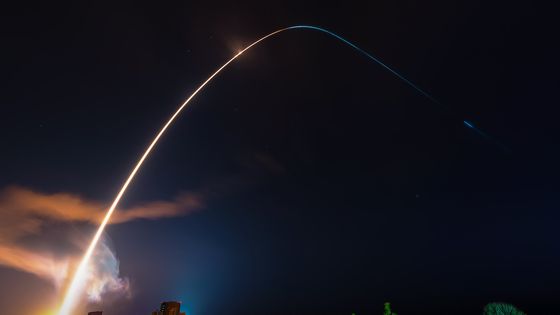
[Vikram - 1 , India ‘s 1 st private orbital rocket, aces debut launch Space](https://www.space.com/space-exploration/launches-spacecraft/skyroot-aerospace-india-first-private-orbital-launch-vikram-1) - Vikram - 1 Ends the ISRO Monopoly on Indian Orbital Launch


Comments
Comments use a GitHub account and are moderated. Comment rules