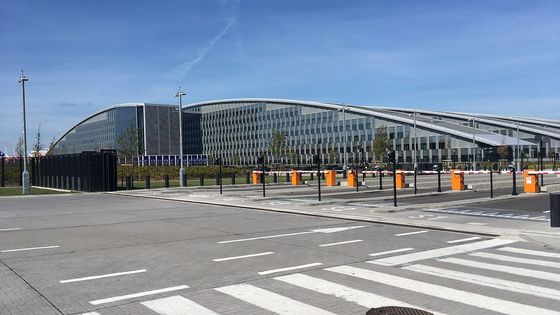
OpenAI works with NATO, allied cyber agencies on AI vulnerability discovery
OpenAI said it is working with NATO and allied cyber agencies to use AI in helping trusted defenders find vulnerabilities, test fixes and protect essential systems,...
AI and the frontier tech around it, explained every morning
55 stories
AI's Binding Constraints Move From Chips to Land, Law and Proof
The most consequential item today is a number nobody has confirmed. The Financial Times, summarized by Techmeme, reports that Anthropic plans a compute program called Anthropic Direct committing more than $900 billion through 2045, including leasing 875,000 TPUs — the AI chips Google designs — for $7.2 billion a year, based on internal documents. The reported plan sits alongside a 600,000-square-foot data center under construction just inland from the Mississippi River in Louisiana, where about 1,300 workers are racing to finish. The supplied account includes no confirmation from Anthropic or Google, and a reported internal plan is not a signed, disclosed commitment. Read the $900 billion as an aspiration on paper until the companies say otherwise.
The rest of the compute news suggests the binding constraint is no longer chip supply. Voters in Ohio passed midterm ballot measures restricting data-center development, putting three proposed Amazon projects inside a planned investment of more than $17 billion at risk, according to a Financial Times analysis re-reported by Techmeme — an analysis that does not specify the measures' terms, which projects are affected, or how much of the money is exposed. Separately, CNBC reports, citing unnamed sources, that Nvidia privately warned customers that the proposed Remote Access Security Act could expose them to US legal action over Chinese firms reaching its chips remotely, through overseas data centers or cloud access. That bill is a proposal, not law, so no exposure exists yet. Capital and silicon are abundant; ballots and statutes are not.
The second thread is verification. Nvidia says Vera Rubin was the only system with results on every MLPerf Training v6.1 benchmark, that Vera Rubin NVL72 delivers up to 2x more performance per GPU than GB300 NVL72, and that it scaled DeepSeek-V3 from 256 to 1,024 GPUs at about 97% efficiency, cutting training time from 16 minutes to roughly four. Its first MLPerf Endpoints submission carries a provisional Kimi K3 result. Those are vendor-submitted benchmarks: structured and comparable, but still self-reported. Anthropic's $900 billion and 875,000 TPUs cannot be checked at all. OpenAI's statement that it is working with NATO and allied cyber agencies on vulnerability discovery, patch validation and protecting critical systems names no agencies, models, access terms or timeline, and describes nothing as deployed. Announcements are cheap; benchmarks are cheaper than deployments.
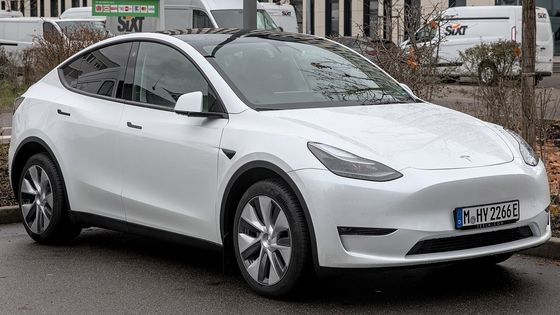
The third thread is accountability, decided case by case and market by market. Tesla's report to federal regulators states that a Model 3 with Autopilot or Full Self-Driving engaged struck an overturned box truck on I-75 near Naples, Florida, at 71 mph, killing two occupants and a man who had stopped to help. Local police and media covered the May 31 crash as a truck wreck in the dark without mentioning driver assist, according to Electrek. That is Tesla's own account to regulators, not an independent determination of cause. In the same cycle, Mercedes-Benz says it is preparing to roll out Drive Assist Pro — a Level 2 system, with the driver still responsible for situational awareness — to MB.OS cars in the US and Germany; Ars Technica, driving it at a Mercedes-hosted event, found it handled complex traffic well. One is a disclosure buried in a filing, the other a product launch; both still treat the human as the fallback. Meta's India-specific retuning of Instagram recommendations, after New Delhi called for tighter content checks, follows the same pattern in content: behavior calibrated per jurisdiction, with no published measure of the effect.
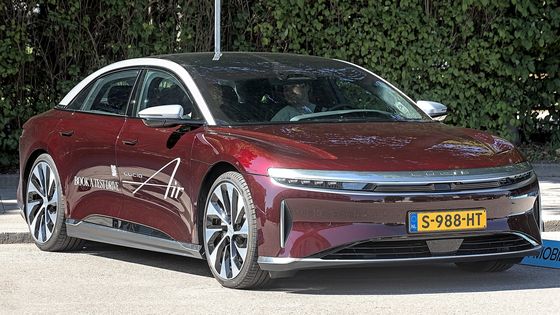
In EVs and energy the question is who pays and who absorbs risk. Lucid cut third-quarter cash burn 30% versus the prior quarter and secured $1.75 billion more from Saudi Arabia's Public Investment Fund, per electrive, with terms, structure and runway undisclosed. Tesla removed the base all-wheel-drive Model Y, lifting the cheapest dual-motor price from $41,990 to $49,990 while the rear-wheel-drive base stays at $39,990 — a trim that had been on sale just over nine months, with no reason given. Toyota is recalling roughly 19,000 C-HR+ EVs, 1,096 in Germany, over a battery-management fault that could shut down the drivetrain while the car is moving; build dates, remedy and notification timing are unstated. Canary Media frames the Senate permitting bill as a contested wager that faster reviews yield more clean energy than fossil. Watch whether Anthropic or Google confirms any figure, whether Amazon challenges or abandons the Ohio projects, what NHTSA or Tesla adds on Naples, and whether Mercedes' rollout dates materialize.
OpenAI said it is working with NATO and allied cyber agencies to use AI in helping trusted defenders find vulnerabilities, test fixes and protect essential systems,...
Isomorphic Labs, the AI drug-discovery company spun out of Google's DeepMind and now part of Alphabet, raised $5 billion in a Series C round, six months...
The Childlight Institute in Edinburgh reports that reports of AI-generated child sexual abuse material rose from about 4,700 in 2023 to more than 400,000 in 2025,...
Bloomberg's Katrina Manson reported on November 17 that, in simulated scenarios, advanced AI models from Anthropic, Google, xAI, DeepSeek and OpenAI regularly misidentified civilians, ambulances and...
Anthropic is telling prospective investors in its initial public offering that it expects to price shares at the high end of its $70–$78 marketed range or...
Tiberius Aerospace, a "defense-as-a-service" startup that uses AI to design long-range supersonic artillery munitions, has raised an $85M Series A at a valuation above $1B…
OpenAI released GPT-6.2 Astra and Sol with lower API prices and some benchmark gains, and access is available now for Plus, Pro, Enterprise and Edu users...
Nvidia's interim CEO has reaffirmed that the company will keep its open-source AI strategy and still intends to acquire Hugging Face, according to TechCrunch, following Jensen...
California Attorney General Rob Bonta sued OpenAI in state court, invoking California's public nuisance and unfair competition laws over the July 2026 Hugging Face hack and...
Microsoft AI published an announcement introducing MAI Code 2 and MAI Code 2 Flash, two models presented as coding-focused.
TechCrunch reports that after Anthropic's IPO, Amazon will hold just under 15% of the AI lab and Google nearly 14%, giving the two cloud companies close...
Model ML has raised $250 million for AI agents aimed at investment banking and consulting work, according to TechCrunch.
Google is rebranding its Spark AI agent as Gemini Tasks and making it free, with the mode powered by the new Gemini 4 Hydrogen model, according...
OpenAI is positioning two upcoming models, GPT-6 Astra and GPT-6 Luna, as computer-use agents that automate US healthcare administration by operating existing clinic software and insurance...
The US is moving to require a license for Nvidia chip purchases by data centers in third countries such as Singapore and Malaysia, closing a route...
Cybersecurity startup Calif says it used a model called GPT-6 Cyber to uncover a remote code execution (RCE) vulnerability in Java — a flaw that lets...
Google is rolling out new Gemini app settings that split two things that were previously bundled: keeping your chat history and allowing your chats to be...
Anthropic is reportedly planning a data-center and compute program called Anthropic Direct that would commit more than $900 billion through 2045, according to Financial Times reporting...
NVIDIA says its Vera Rubin platform was the only system with results on every MLPerf Training v6.1 benchmark this round, covering large language models, image generation,...
Nvidia has privately warned its customers that pending US legislation on Chinese companies remotely accessing its AI chips could expose those buyers to US legal action,...
Voters in Ohio passed midterm ballot measures restricting data-center development, putting three proposed Amazon projects at risk within a planned investment of more than $17 billion…...
Intel announced it will acquire Classiq, a quantum software company whose hardware-agnostic platform lets engineers design, synthesize, optimize, simulate and execute quantum algorithms at a higher...
Tesla's report to federal regulators states that a Model 3 with Autopilot or Full Self-Driving engaged struck an overturned box truck on I-75 near Naples, Florida,...
Mercedes-Benz says it is getting ready to start rolling out Drive Assist Pro, its "collaborative" partially assisted driving system, to customers whose cars run the new...
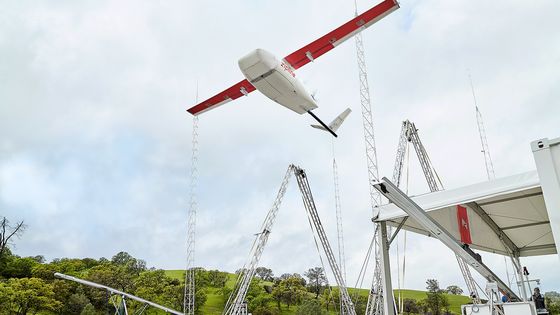
Uber Eats customers in Spring, Texas, a Houston suburb, can now receive food orders by Zipline drone, according to TechCrunch's Kirsten Korosec.
Paris-based Genesis AI said it has raised a $500 million Series A at a $3.5 billion valuation, as reported by the Wall Street Journal, to build...
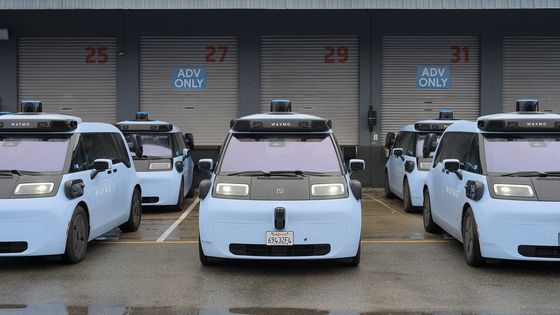
The California Department of Motor Vehicles barred Waymo's robotaxis from operating on state freeways…
Tesla announced on November 16 that it had expanded its Miami Robotaxi service area to about 59 square miles from roughly 31, a 92% increase that...
FAW-Volkswagen, Volkswagen's main Chinese joint venture, has opened pre-orders in China for the ID.
Toyota is recalling roughly 19,000 C-HR+ electric vehicles worldwide, 1,096 of them in Germany, because of a fault in the battery management system.
Lucid cut its cash burn by 30% in the third quarter of 2026 compared with the previous quarter, according to electrive.
Tesla has removed the entry-level all-wheel-drive version of the Model Y from its configurator, raising the cheapest way to get a dual-motor Model Y from $41,990...
Canary Media's analysis describes the bipartisan Senate permitting-reform bill as a three-part wager by Democrats and clean energy advocates…
Rooppur 1, Bangladesh's first nuclear power unit, has been connected to the national grid and supplied its first electricity, according to World Nuclear News.
Tesla has unveiled Powercore, a US-made solid-state medium-voltage transformer that also performs the inverter and breaker functions in a single unit.
Electrek reports that Tesla has opened orders for the $29,990 Cybercab, with first deliveries expected in Austin next month.
BYD's premium brand Denza has entered the Indian market, launching the D9 MPV and Z9 GT shooting brake as its first two models there.
Comac's CE-25A, a 19-seat electric aircraft, completed its first manned flight on Saturday, according to electrive.
AYK Energy is supplying battery systems totalling 165 MWh for three new all-electric fast ferries operated by Danish shipping company Molslinjen, with 55 MWh installed on...
Poland's Energy Regulatory Office (URE) awarded about 1.81 GW of solar capacity in two renewable energy auctions held on Nov. 9 and 10, with photovoltaic projects...
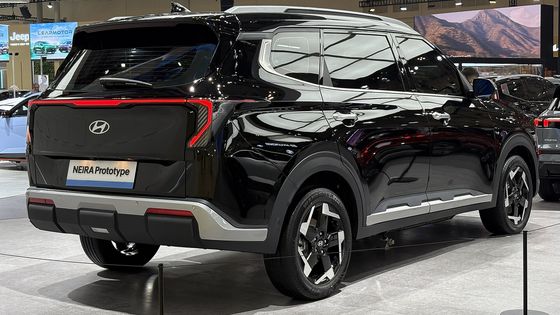
Hyundai has shown the production version of the Neira, a three-row, seven-seat electric SUV, for the first time.
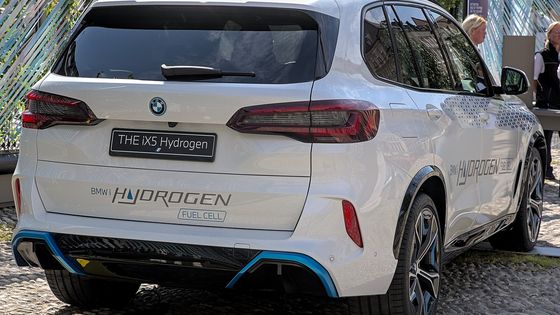
BMW has announced the iX5, its first fully electric vehicle built in the United States, claiming an estimated range of up to 456 miles along with...
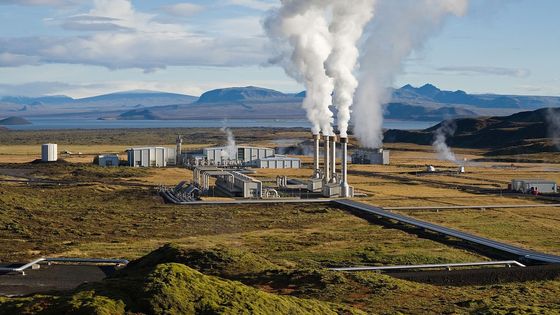
Quaise Energy, a Houston-based geothermal startup, announced Tuesday that Google has agreed to purchase 50 megawatts of carbon-free power from its first commercial project, called Project...
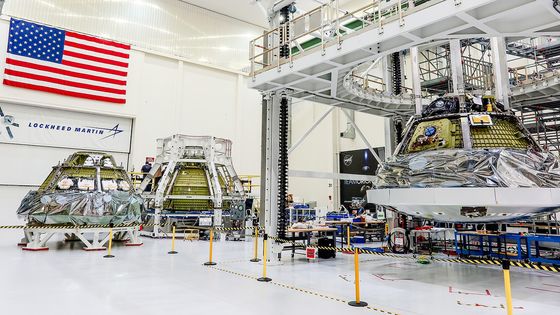
Wired's 2026 yearbook feature recounts the Artemis II crew's mission through personality clashes, blaring smoke detectors and a broken urine vent, saying the astronauts made history...
Reflect Orbital, a California-based startup, has raised $73.5 million in new funding—bringing its total to more than $100 million…
United Launch Alliance confirmed on Nov. 17 that its Nov. 15 return-to-flight Vulcan Centaur launch, carrying 40 Amazon Leo internet satellites, failed: the vehicle "experienced low...
Finnish satellite developer ICEYE announced Tuesday an all-cash voluntary tender offer, made through an Italian subsidiary, to buy Italian rocket-maker Avio for more than $2.2 billion…...
Sellas Life Sciences said on Tuesday that its experimental immunotherapy galinpepimut-S reduced the risk of death by 41% compared with standard treatment in patients with an...
Report-URI's blog reports that Optimizely, a third-party optimization script used by many websites, was compromised and used to serve malware through customer pages including Zoom and...
Meta said on Tuesday that it had modified Instagram's recommendation systems specifically for India to show less sexual and violent content, after New Delhi called for...
CNN reported on November 17, citing six people familiar with the matter, that NSA Net — the highly classified network the National Security Agency uses for...
Kalshi Inc. says the U.S. Commodity Futures Trading Commission (CFTC), the federal regulator for derivatives markets, ordered it to stop trading on "mention markets"…
Import AI 481 summarizes recent work on AI R&D subcontracting, AI-oriented wet labs, covert sabotage during self-improvement, electromagnetic-signal models, and edge computer vision…
A concise Latent Space episode recap that captures BFL's arguments for multimodal visual intelligence and a few practical engineering lessons, but without enough technical depth or...
A clear, first-hand explanation of rewriting Datasette Lite to run the full server-side Python app in the browser via service workers and Pyodide, presenting a transferable...