Starship's first second-stage catch reframes launch costs, GeekPark reports
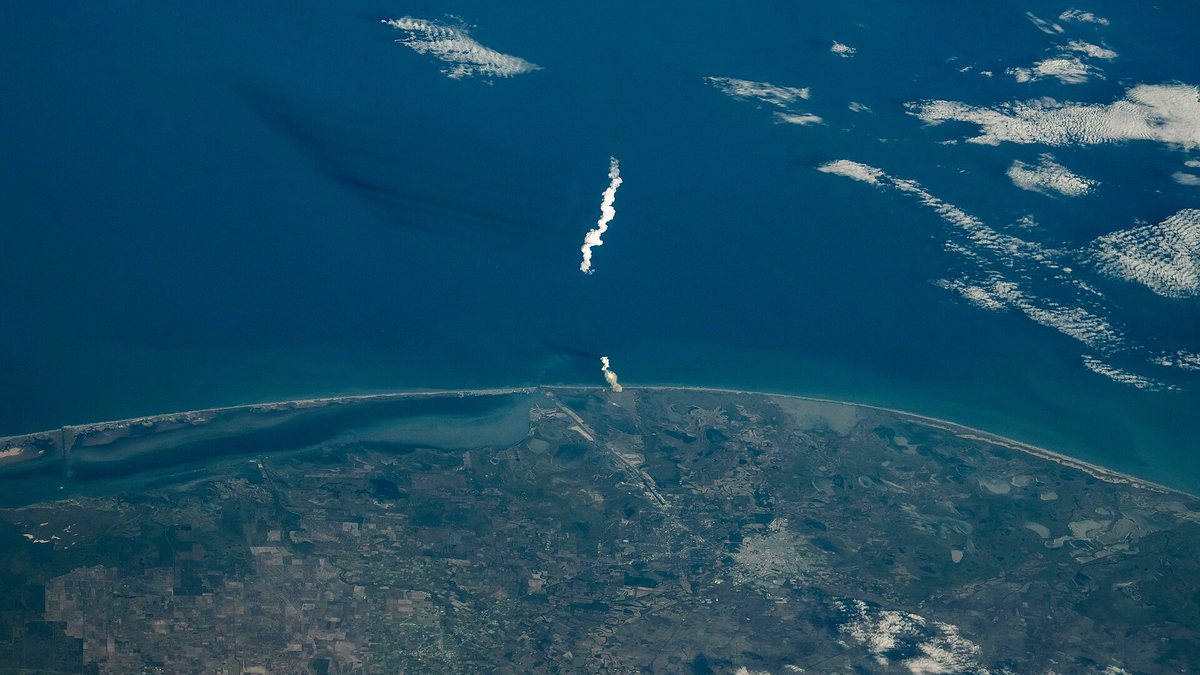
SpaceX’s Starship returned from an orbital flight and was caught by the launch tower’s mechanical arms on November 14 (US Central time), which GeekPark describes as the first engineering validation of recovering an orbital-class heavy spacecraft — the first successful case of second-stage recovery. The article argues the significance lies in cost: full reusability at large scale would lower the price of moving mass to and from orbit, and it draws a sharp line between booster recovery (separation at roughly 2 km/s, a 6–7 minute return) and ship recovery (re-entry from about 7.8 km/s, a 30-minute to one-hour return through thermal protection, communications blackout, aerodynamic braking and precision landing). Alongside that, it profiles Chinese startup Chuanyuezhe (穿越者), which says it has completed a full-scale landing-buffer test keeping touchdown shock load under 5g — claiming to be the third commercial company worldwide to do so — and plans a suborbital reusable crewed ship (CYZ1), an orbital cargo vehicle (CYZ2.1, 20 tonnes up and 10 tonnes down to low Earth orbit) and an orbital crewed version (CYZ2.2, at least 10 people), with the stated goal of cutting the China-US gap to within five years. The piece is secondary analysis with vague attributions: it names no SpaceX or independent source for the catch, and its specifics — including the roughly 22.5-hour flight duration and the 2026 Chinese booster recoveries it cites for comparison — are not corroborated within the article.
Verified and unconfirmed
- Verified: SpaceX caught Starship’s upper stage with the launch tower’s arms at Starbase, Texas, on November 14, 2026, after Flight 15 lifted off on November 13 carrying 26 Starlink satellites; the Super Heavy booster was caught as well, the first time both stages of the 124-meter vehicle were recovered (Ars Technica, Phys.org, and SpaceX’s own launch webcast).
- Not yet confirmed: the roughly 22.5-hour orbital duration of the ship’s flight and the framing of the catch as the first engineering validation of orbital-class heavy spacecraft recovery rest on GeekPark’s account alone. Every figure about the Chinese startup 穿越者 (Space Transportation Pioneer) — its January 2023 founding, the under-5g touchdown impact in its full-size landing-buffer test, the claim to be the world’s third commercial company to complete such a test, the CYZ1 / CYZ2.1 / CYZ2.2 three-stage plan, and its plan to tender 30 commercial crewed launches — comes from the company itself, with no dates attached to the milestones. The argument that second-stage recovery will bend the space-economy cost curve is the outlet’s and its interviewees’ projection, not an independently measured result.
Background
Every previous Starship upper stage either splashed down in the ocean or was lost; AI Daily Radar’s November 15 digest reported that the 15th test flight instead brought Ship 42 back to the launch site after about 22.5 hours and 14 orbits, while the Super Heavy booster’s own catch was aborted and the booster was destroyed over the Gulf of Mexico. The distinction the GeekPark article draws is between that first-stage return, which is powered and lasts roughly 6-7 minutes from about 2 km/s, and second-stage recovery, which means surviving re-entry from orbital velocity near 7.8 km/s and therefore draws on crewed-spacecraft technology. GeekPark also frames the milestone against the roughly 11-year gap between SpaceX’s first booster landing in 2015 and Chinese first-stage recoveries in 2026.
Why it matters
For China’s commercial space sector, the concrete consequence is that first-stage milestones do not carry over to second-stage recovery: Long March 10B and Zhuque-3 have demonstrated first-stage recovery, but the article reports that 穿越者 is pursuing the separate crewed-spacecraft reentry and landing path and has opened recurrent tenders covering 30 future commercial crewed launches. The near-term action item is therefore to settle ship–rocket interface standards and secure real payload and crew orders, as Chinese reuse work shifts from single recovery tests toward reflight validation and cost-per-delivery metrics.
What to watch
Whether SpaceX’s next Starship flight repeats the tower catch and publishes recovery data, which would turn a single success into a reusable cadence. On the Chinese side, watch for Chuanyuezhe’s CYZ1 suborbital vehicle to reach flight test and for the outcome of its tender for 30 commercial crewed launch contracts; neither has a published date.
Further reading
- With Starship catch , SpaceX still shows it can dazzle… - Ars Technica
- SpaceX Starship test to attempt first-ever spaceship ‘ catch ‘
-
[SpaceX Starship Flight 15 Launch & Ship Catch - YouTube](https://www.youtube.com/watch?v=6egy0KSsK2s) - 2026-11-15 — SpaceX 首次用发射塔接住从轨道返回的星舰
- 朱雀三号实现 一 子 级 着陆支腿方式 回 收 _腾讯新闻
- 朱雀三号有新 进 展 ! 商业 航 天 复 用 降本将迎关键验证(附股) _ 东方财富网
- 长征十号乙 一 级 回 收 成功,对 中 国 商业 航 天 意味着什么? - OFweek…


Comments
Comments use a GitHub account and are moderated. Comment rules