First home use of nerve-connected LUKE bionic arm with touch feedback
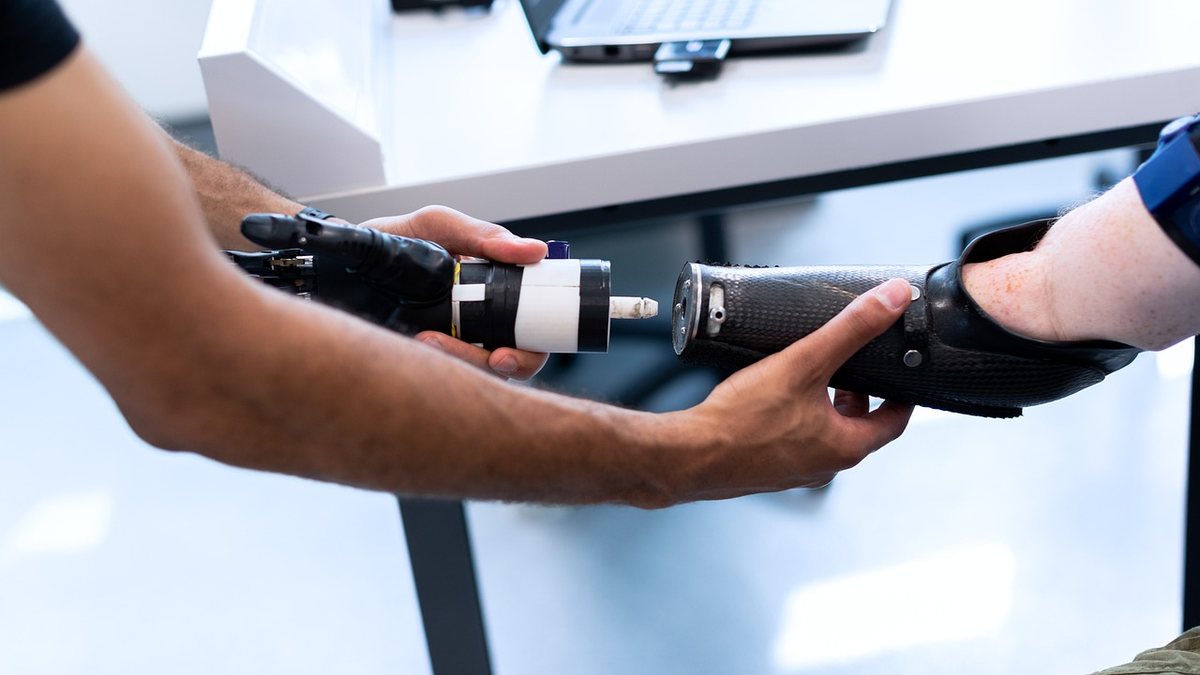
Avi Davidson, a 33-year-old trauma therapist, has become the first participant in a University of Utah clinical trial to take an experimental LUKE bionic arm home and use it independently. The arm is connected to three nerves in his upper forearm through electrode arrays—100 needles per nerve—plus 24 muscle electrodes, giving him control of hand and wrist movements and pressure feedback that lets him handle grapes, eggs and a loved one’s hand. Davidson is the ninth person to receive the implant but the first to use it outside the lab; the trial is testing day-to-day usefulness, not the FDA-approved LUKE arm itself. Participants do not keep the device and undergo surgery to implant and remove it.
Verified and unconfirmed
- Verified: The University of Utah team and MIT Technology Review report that Davidson is the first of nine implanted trial participants to take the nerve-connected LUKE arm home; the LUKE arm received FDA approval in 2014, but the nerve interface is experimental.
- Not yet confirmed: Peer-reviewed results, independent measures of how much the device helps in daily life, any long-term effects on Davidson’s nerves or brain, and whether other participants will use it at home; the report gives no trial completion date, success rate or commercial availability.
Background
The LUKE arm is not itself new: it was developed in the 2000s, first trialed in 2014 and approved by the FDA that same year as a motorized prosthesis. What is experimental is the connection — the University of Utah team has run a trial since 2013 in which electrode arrays are shot at high velocity into the nerves of a residual limb, with wires left protruding through the skin, so that nerve activity can steer the hand and electrical stimulation can send pressure sensations back. Davidson is the ninth person to receive the implant, but the first in that trial to take the system home rather than use it only under supervision.
Why it matters
For prosthetics developers, this trial’s test is now unsupervised home use rather than a lab demonstration: the Utah team says it wants to learn when the device helps and where it fails in daily life. That evidence still rests on one participant, so it does not yet establish reliability across users.


Comments
Comments use a GitHub account and are moderated. Comment rules