How reusable rockets made spaceflight cheaper, and where the savings stop
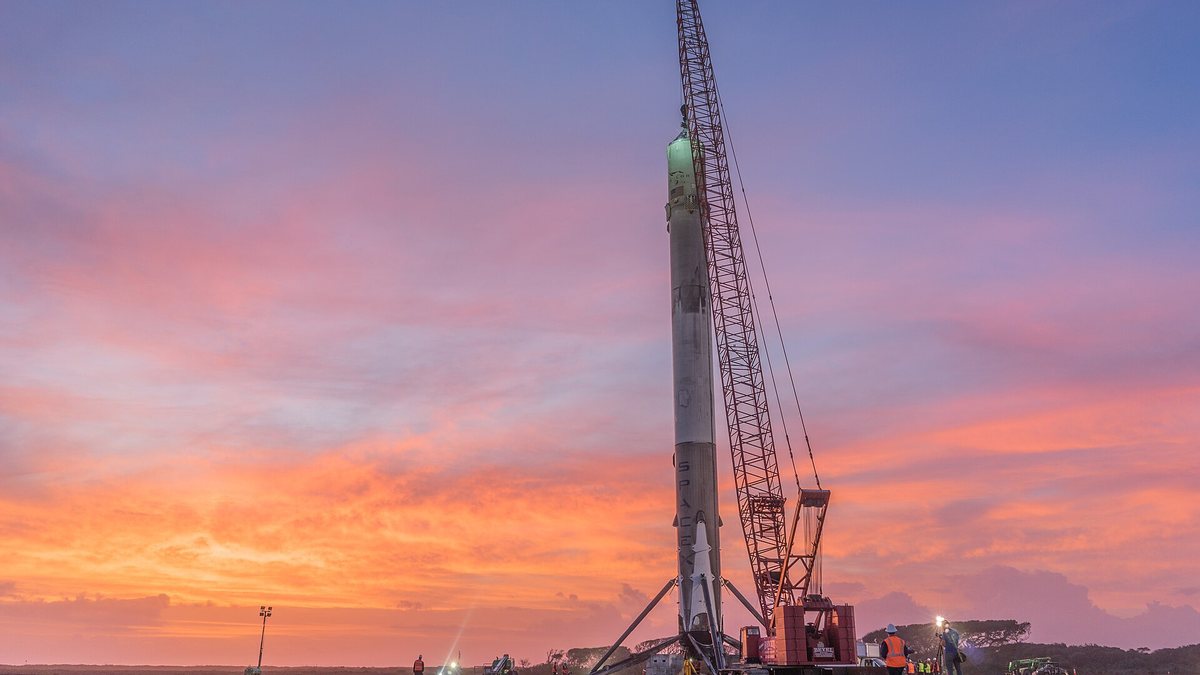
For most of the space age, every rocket was thrown away after one flight. SpaceX’s Falcon 9 changed that by landing its first stage and flying it again, and in August 2026 one booster, B1067, flew for the 37th time.
This explainer covers why reusing the first stage matters so much, what launches cost today, and what reuse does not fix.
Why the first stage is the prize
The first stage is the biggest and most expensive part of a rocket: it carries most of the engines and most of the propellant tankage. When SpaceX began recovering boosters, the first stage was commonly estimated at around three quarters of a Falcon 9’s launch cost.
Throwing that away on every flight is like scrapping an airliner after one trip. Landing it, inspecting it and flying it again spreads the cost of building it across many missions.
What reuse actually saved
The first reflight of an orbital booster came in March 2017, on the SES-10 mission. SpaceX President Gwynne Shotwell said afterwards that refurbishing that booster cost “substantially less than half” the price of building a new first stage, and that later boosters would need less work.
Reuse has since become routine. In 2025 Falcon 9 flew 165 missions, all successful, according to Space.com, and SpaceX’s pre-IPO filings said only eight of those flights used a brand-new booster. The same filings said boosters have been engineered and demonstrated for up to 40 flights, while the company books them over an accounting life of 25 flights.
What customers pay
Reuse has not made launches cheap for customers in absolute terms. SpaceX’s published standard price for a Falcon 9 launch is $74 million through 2026, up from $70 million in 2025 and $67 million in 2022, according to Spaceflight Now.
That is still well below what competing heavy-lift providers have charged, but it shows the main point: price is not cost. Elon Musk has claimed the marginal cost of a reused Falcon 9 flight is around $15 million, a figure SpaceX has not broken down publicly. The gap between that and the list price is margin, and it funds programs such as Starship.
Where the savings stop
Falcon 9 is only partly reusable. The second stage, which reaches orbit, is still discarded on every flight. Fairings are recovered, but the upper stage is a new build each time.
Demand also shapes the picture. About 79% of Falcon 9 missions in 2026 have carried SpaceX’s own Starlink satellites, according to a Reuters analysis of launch data compiled by astrophysicist Jonathan McDowell. Cheap internal launches help Starlink, while outside customers compete for the remaining slots, and reports in mid-2026 said SpaceX had begun turning some Falcon 9 customers away to focus on Starship.
What to watch
Starship is designed to reuse both stages. Its Super Heavy booster is caught by the launch tower instead of landing on legs, and as of September 2026 SpaceX had reused two Super Heavy boosters across 14 test flights. If the upper stage can also be recovered and reflown routinely, the cost structure changes again. Until then, the Falcon 9 record is the benchmark: how many flights a booster can make, and how quickly it can be turned around between them.
Further reading
- SpaceX sets rocket-reuse record on 100th Falcon 9 launch of the year (Space.com)
- SpaceX launches Falcon 9 booster on record-breaking 35th flight (Spaceflight Now)
- Falcon 9 price rises to $74 million (Spaceflight Now)
- SpaceX saw significant savings reusing a Falcon 9 first stage (SpaceNews)
- SpaceX spent less than half the cost of a new first stage on relaunch (TechCrunch)
- SpaceX’s satellite ambitions squeeze out rivals reliant on its rockets (Reuters via Express Tribune)
- SpaceX just proved rocket reuse works better than anyone expected (BGR)
- SpaceX Falcon 9 retirement and Starship launch customers (Fortune / The Conversation)




Comments
Comments use a GitHub account and are moderated. Comment rules